
Sales training platforms: How to choose and where conversation insights fit

Table of Contents:
Sales training platforms promise better skills, stronger messaging, and higher performance. Many teams still struggle to see those improvements show up in sales calls. Training completion looks healthy, but discovery quality varies, feedback depends on the manager, and deal outcomes remain inconsistent.
As buying cycles tighten, sales leaders look beyond training programs alone. They want to understand how reps sell in customer conversations, how feedback reinforces training, and where execution breaks down. Sales training platforms now serve different roles across onboarding, coaching, content, and execution.
This guide explains what sales training platforms do, how they differ by role, and why conversation insights matter for reinforcing training in day-to-day selling.
TL;DR: Key takeaways
- Sales training platforms were designed to scale onboarding and standardize sales fundamentals.
- Enablement platforms expanded training into messaging, playbooks, and content delivery.
- Training completion does not explain how reps perform in sales conversations.
- Conversation intelligence adds visibility into how selling happens during calls.
- Avoma connects training to execution by analyzing sales conversations and reinforcing skills during deals. Try it for free.
How this list is organized
Sales training platforms emerged to help growing sales teams onboard reps consistently and standardize core sales motions. Early platforms focused on structured curricula, certifications, and assessments to reduce ramp time and establish shared methodology.
Over time, teams expanded training into content, messaging, and playbooks. While this improved consistency, it assumed that training translated directly into execution. As sales cycles lengthened and buyer scrutiny increased, that assumption broke down.
Conversation insights filled this gap by showing how selling unfolds during calls and tying reinforcement to customer interactions rather than completion data.
This list does not compare platforms by features. It groups them by the role they play in reinforcing selling behavior.
Sales training platforms in this guide are grouped into three functional categories:
- Conversation intelligence and coaching
- Structured training and readiness
- Enablement and governance
These platforms often work together. Comparing them as if they solve the same problem leads to forced tradeoffs and unclear buying decisions.
Top sales training platforms in 2026
1. Structured training and readiness platforms
This category supports onboarding and skill standardization.
Mindtickle
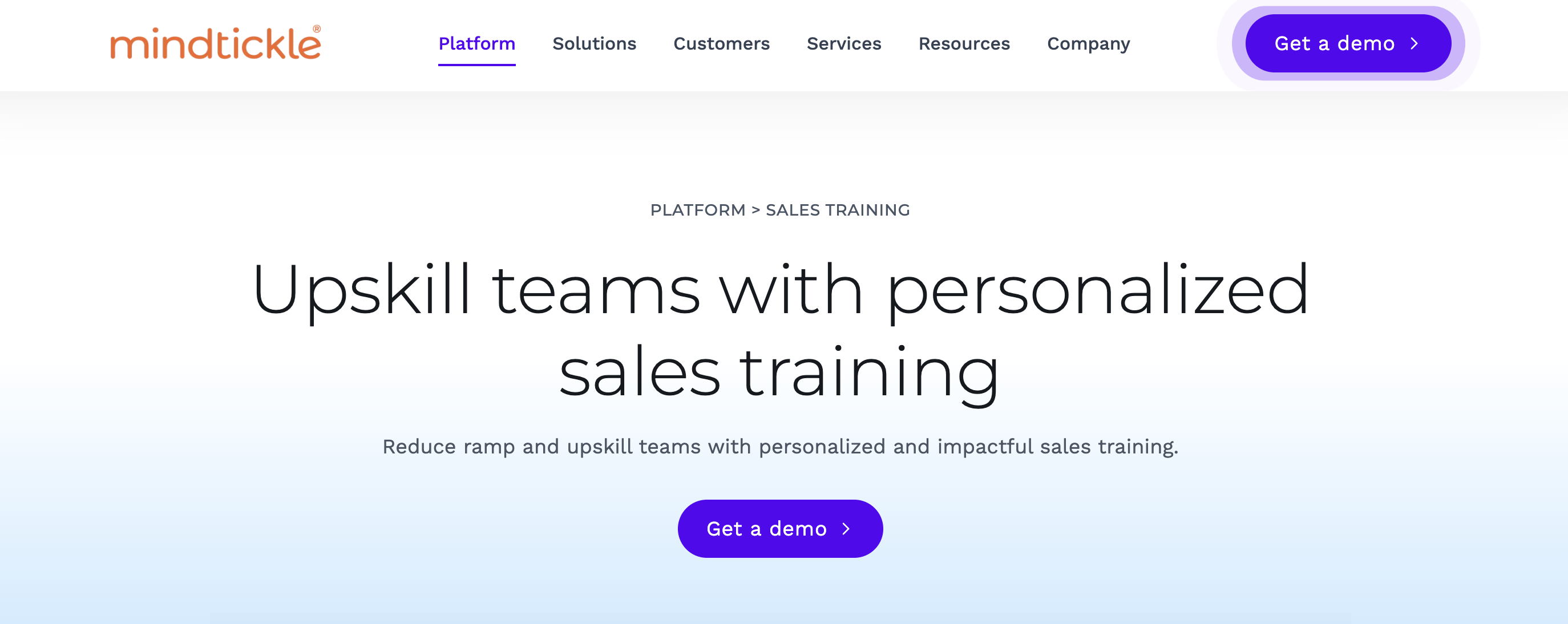
Mindtickle is a structured sales training and readiness platform designed for onboarding and certifications. Enablement teams use it to build role-based learning paths and track readiness across sales roles.
The platform emphasizes standardization and assessment and supports organizations with frequent onboarding cycles or global sales teams.
Best for
Teams that need to onboard reps at scale and validate baseline sales skills through structured training, certifications, and readiness assessments.
Notable limitations
Training effectiveness is measured through assessments and completion data, not selling behavior. This makes it hard to understand whether certified reps execute consistently during discovery, demos, and deal progression.
Pricing
Enterprise pricing.
SalesHood
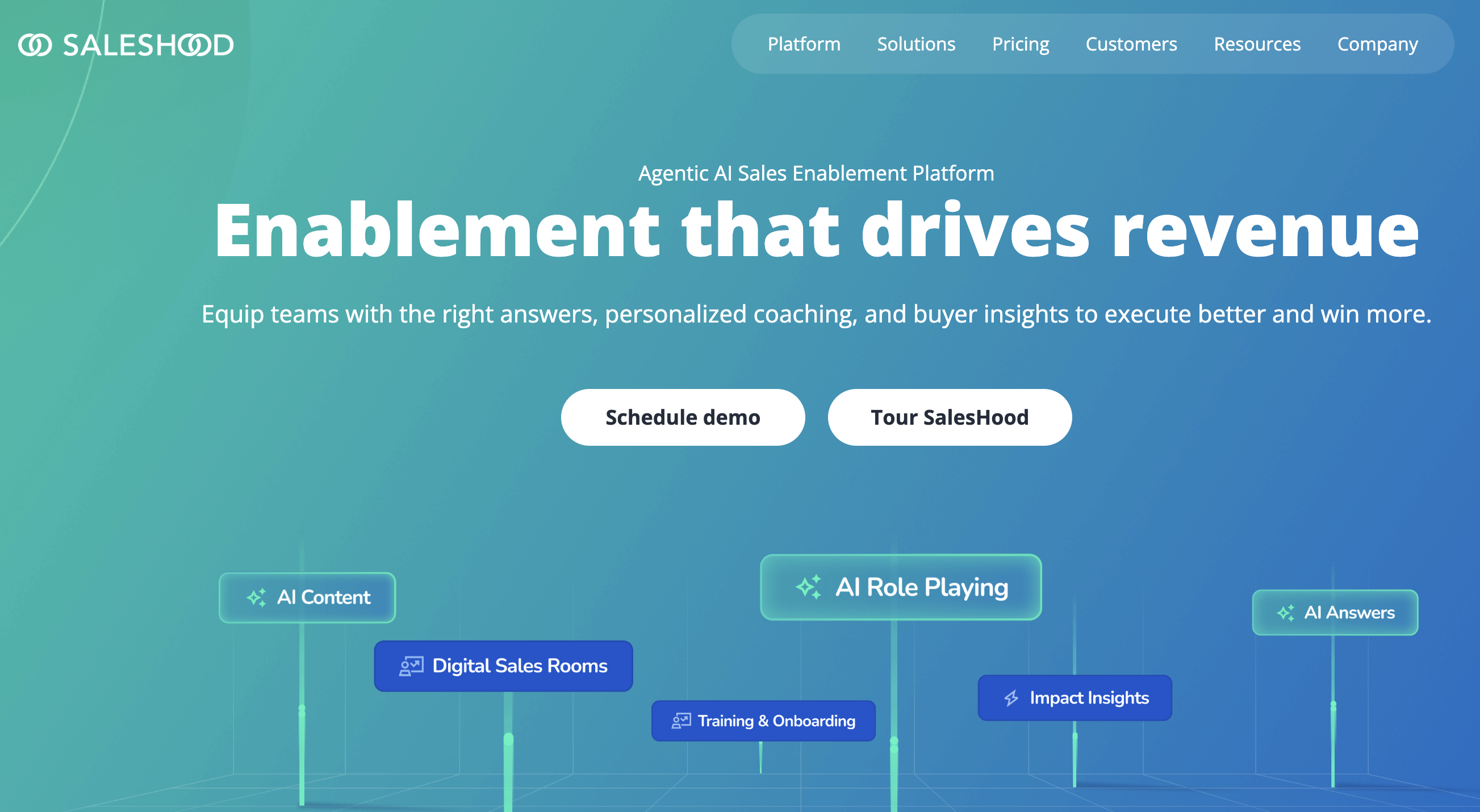
SalesHood focuses on guided onboarding and certification programs. It helps sales teams standardize how reps learn messaging, processes, and sales motions.
Teams use SalesHood to deliver structured onboarding paths, role-based certifications, and manager-led assignments.
Best for
Sales and enablement teams that want guided onboarding and manager-led certification to ensure reps learn defined sales motions consistently.
Notable limitations
SalesHood does not capture or analyze customer conversations. Managers cannot validate whether reps follow trained sales motions once they are in live selling situations.
Pricing
Enterprise pricing.
2. Enablement and governance platforms
This category supports messaging and content delivery.
Highspot
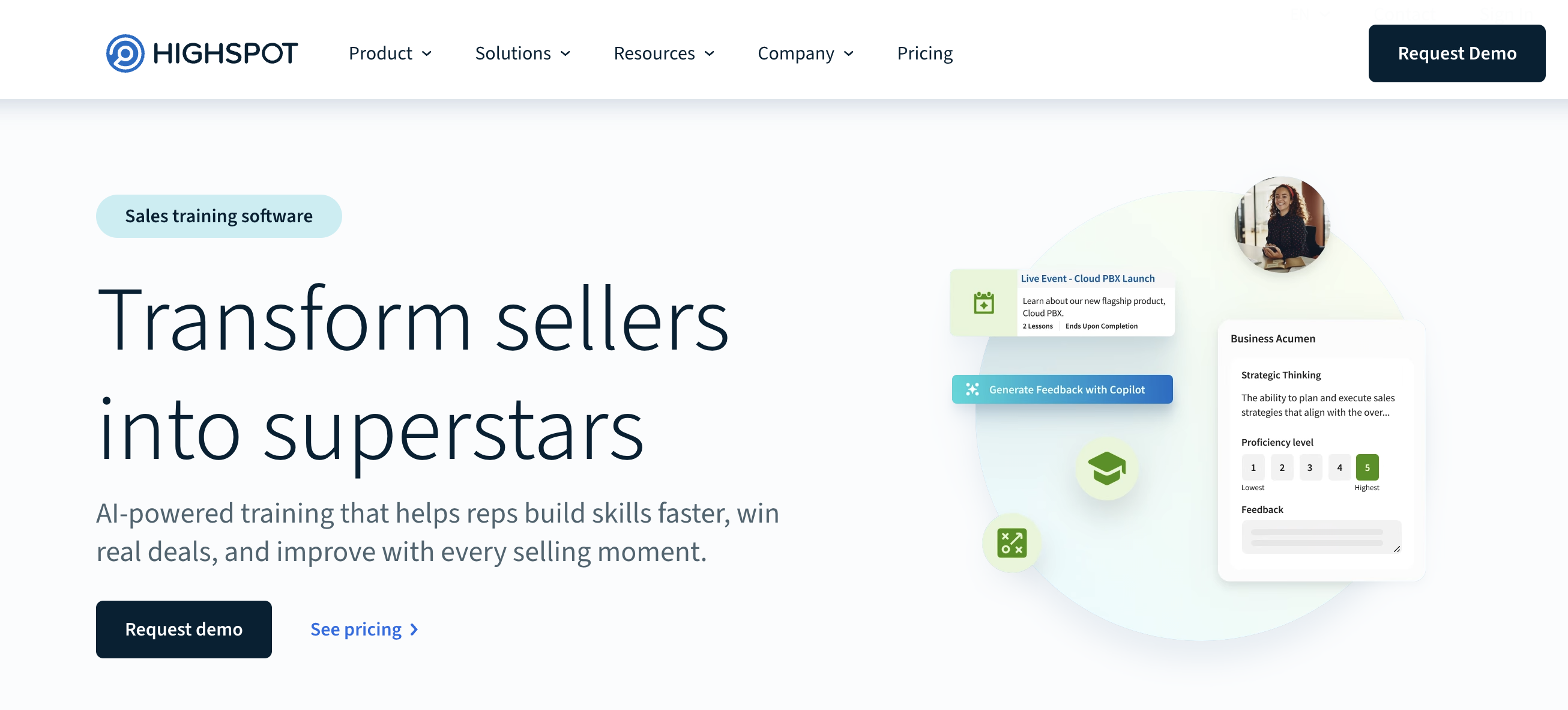
Highspot delivers training as part of a broader enablement platform. Teams use it to run onboarding programs, guided learning paths, and coursework tied to sales roles.
Training is closely linked to content and playbooks, helping reps learn how to use approved messaging during deals.
Best for
Teams that need to train reps on messaging and content usage and ensure enablement materials are applied consistently during deals.
Notable limitations
Highspot focuses on content access and enablement, not message execution. It tracks what content reps open or share, but not how they present it in sales calls, whether messaging is delivered correctly, or if it aligns with buyer context during conversations.
Pricing
Enterprise, sales-led pricing.
Seismic
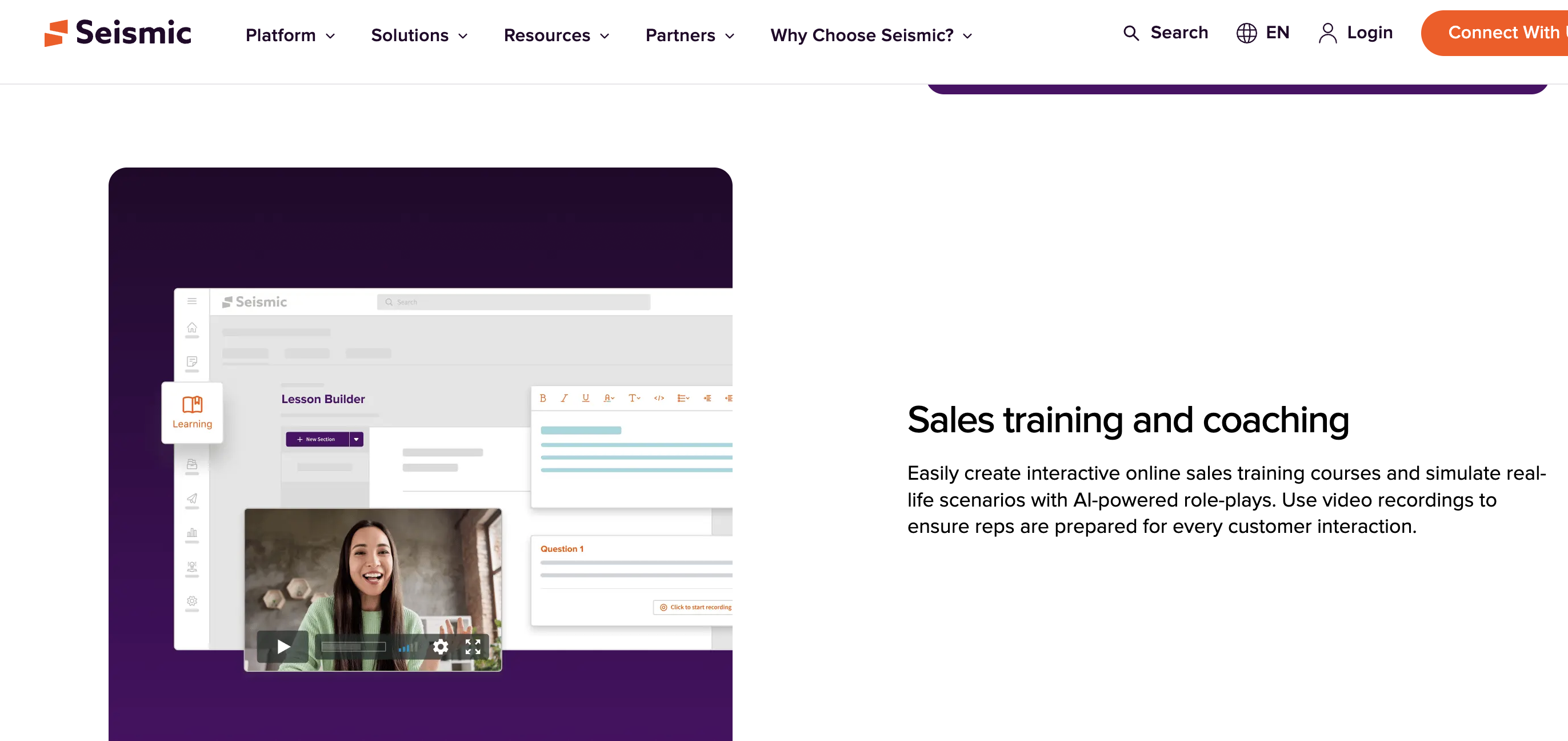
Seismic enables teams to create structured training courses, personalized learning paths, and live or on-demand sessions.
It includes role-based learning, coaching plans, and skills assessments designed for large organizations.
Best for
Large organizations that need governed training, messaging, and enablement programs delivered consistently across roles and regions.
Notable limitations
Seismic does not provide native insight into sales call execution. Understanding how training and messaging translate into deal-level behavior requires additional tools
and manual correlation.
Pricing
Custom enterprise pricing.
Allego
Allego combines training delivery, content sharing, and coaching workflows in one platform. Teams use it for onboarding, video-based practice, and internal communication.
It supports structured programs, certifications, and live training events in a single system.
Best for
Teams that want to combine sales training, practice, and content reinforcement in a single system without managing multiple enablement tools.
Notable limitations
Allego’s conversation insight is primarily based on rep-submitted videos and training exercises rather than automatic capture of live sales calls. This limits visibility into objection handling, discovery quality, and rep behavior across real customer conversations.
Pricing
Custom enterprise pricing.
3. Conversation intelligence and coaching platforms
This category captures sales calls and meetings and analyzes them using AI, scorecards, and sales methodologies.
Gong
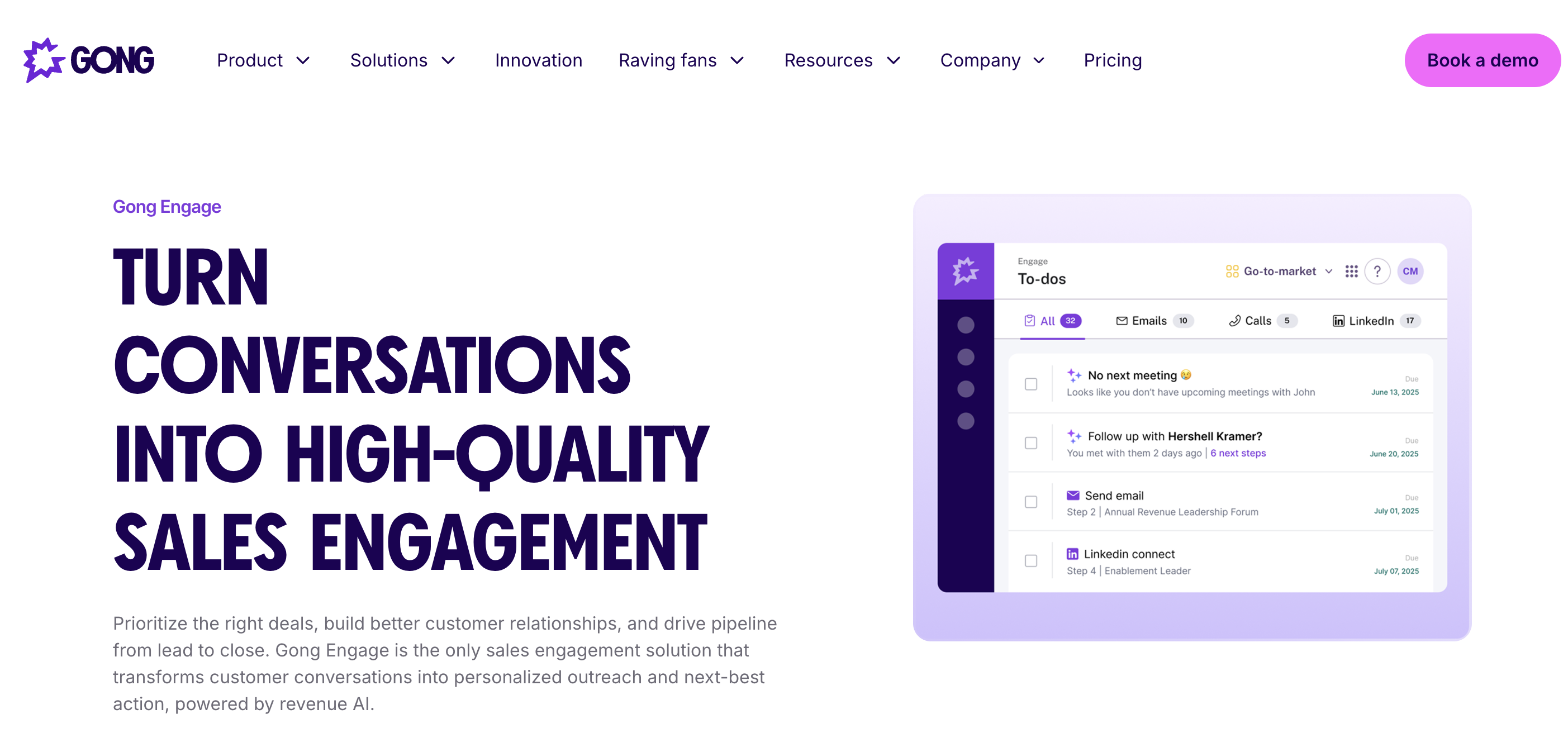
Gong analyzes sales conversations to surface patterns across deals and teams. Leaders use it to understand why deals progress, stall, or close.
Managers review calls, identify recurring issues, and share examples from top performers.
Best for
Enterprise sales leaders who want to analyze sales conversations to understand deal risk, pipeline trends, and performance patterns.
Notable limitations
Gong is optimized for deal-level analysis rather than day-to-day training reinforcement. Coaching insights are surfaced primarily for deal reviews and leadership reporting, with limited support for lightweight, ongoing rep coaching tied to individual selling behavior across every call.
Pricing
High enterprise pricing, expensive platform and onboarding fees.
Avoma
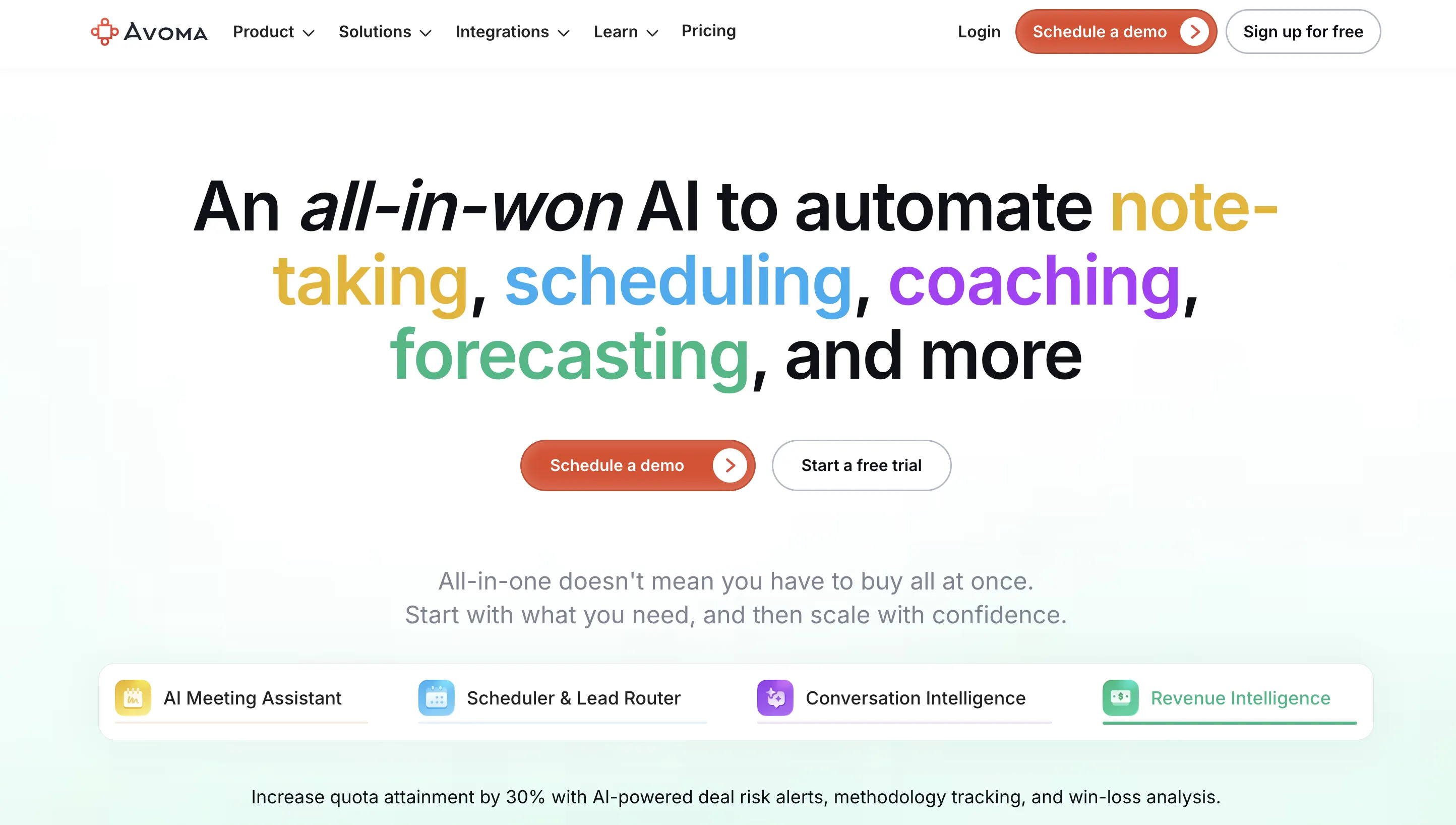
Avoma captures and analyzes sales conversations to help teams understand how reps run discovery, handle objections, and move deals forward.
Calls are recorded automatically and evaluated using AI scorecards and sales methodologies. This makes selling behavior observable and gives managers a consistent basis for feedback.
Over time, Avoma highlights patterns in how reps sell and where gaps appear after onboarding. This reinforces training through customer conversations rather than replacing structured programs.
Best for
Teams that want to reinforce sales training and give feedback by analyzing how reps execute discovery, demos, and objections during sales calls.
Notable limitations
Does not replace learning management systems or content repositories.
Pricing
Free plan available. Paid plans start at $19 per recorder seat per month.
Sales training depends on execution
Sales training improves results when teams can see how skills show up during customer conversations. Programs, certifications, and content matter when execution is observable.
Each platform in this guide plays a distinct role. Strong teams choose them intentionally to reinforce selling behavior and improve outcomes.
Frequently Asked Questions
A sales training platform helps sales teams onboard reps, standardize skills, and reinforce sales motions through structured programs, certifications, or practice. These platforms focus on what reps are taught, not necessarily how they apply it in customer conversations.
Sales training platforms solve consistency and scale issues. They help teams reduce ramp time, align reps on messaging and methodology, and ensure baseline readiness across roles, regions, and managers.
Sales training platforms focus on skill development, onboarding, and readiness. Sales enablement platforms focus on content, messaging, and playbooks that support reps during deals. Many teams use both, but they serve different purposes.
Some platforms include coaching workflows tied to assessments or manager feedback. Most do not provide direct visibility into how reps perform during sales calls, which limits coaching effectiveness.
Conversation insights show how reps apply training during live sales calls. This allows teams to reinforce skills based on selling behavior rather than course completion, making training more relevant and actionable.
No. Conversation intelligence platforms complement sales training tools. Training platforms teach skills, while conversation insights show how those skills are used in customer interactions.




What's stopping you from turning every conversation into actionable insights?


