
Best sales engagement platforms in 2026: Ranked by real workflow impact

Table of Contents:
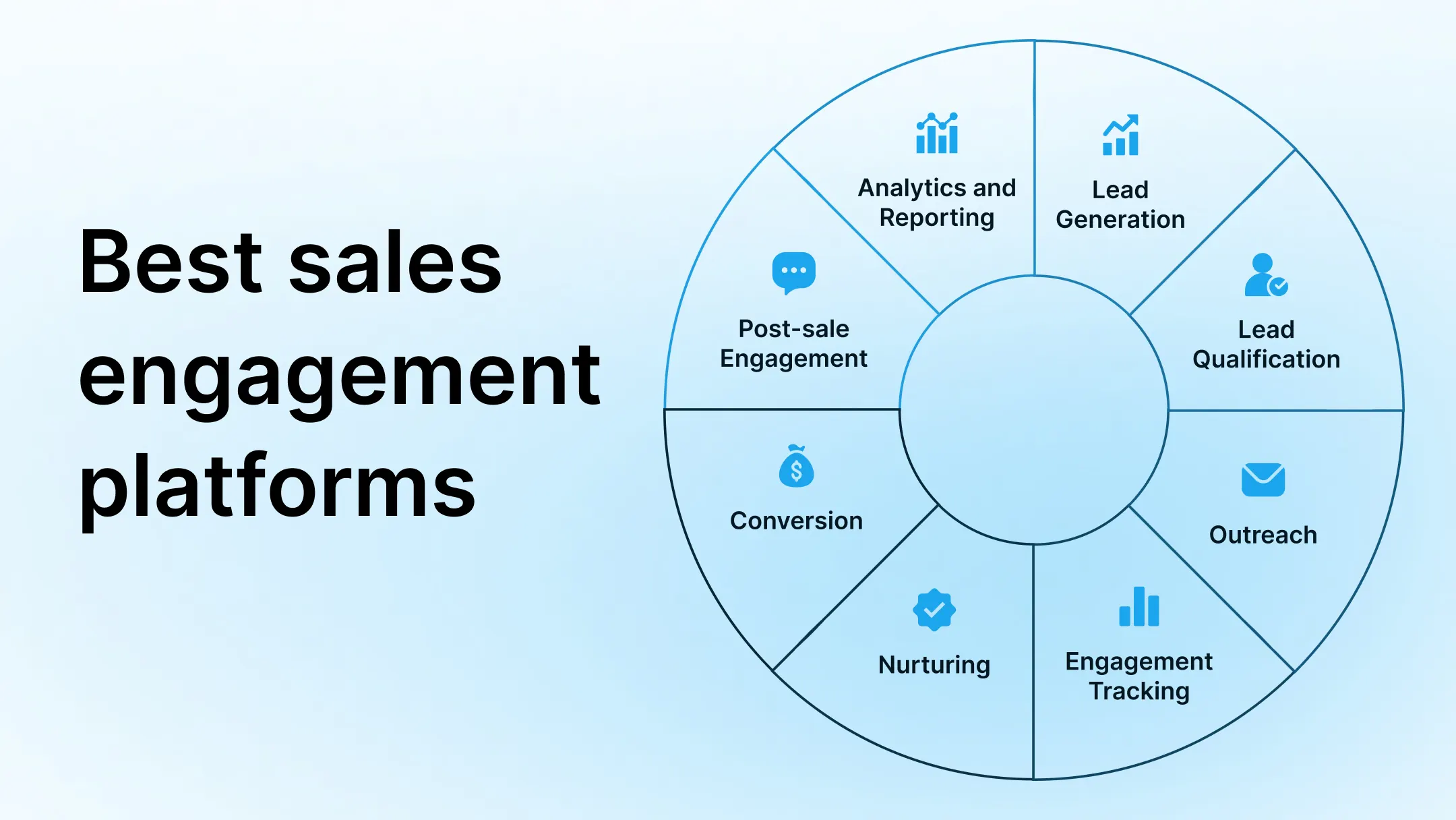
Sales reps spend only 40 percent of their week selling. The rest goes to logging activity in the CRM, creating follow-up tasks, switching between email and dialers, and tracking outreach across separate tools.
A sales engagement platform centralizes and automates that work. It runs multi-channel sequences, logs emails and calls to Salesforce, triggers follow-ups based on prospect actions, and shows which outreach leads to booked meetings and pipeline.
This category is built for SDR teams, outbound AEs, and revenue leaders responsible for pipeline.
The evaluation is straightforward:
- Does it eliminate manual CRM logging?
- Does it ensure follow-ups happen on time across every rep?
- Can you see which sequences generate meetings and revenue?
This guide ranks sales engagement platforms based on how well they replace manual follow-ups and connect rep activity to pipeline results.
TL;DR
- This article ranks sales engagement platforms based on workflow impact.
- Evaluation criteria:
- Daily rep workflow friction
- CRM integration depth (Salesforce, HubSpot)
- Reporting and forecasting alignment
- Setup and admin overhead
- Practitioner feedback
- The best sales engagement platforms
- Salesforce-native enterprise: Salesforce Sales Engagement
- High-volume outbound: Outreach
- Outbound + coaching visibility: Salesloft
- Data + outreach in one: Apollo.io
- AI-driven, signal-based outbound: Amplemarket
- Multichannel + built-in database: Reply.io
- SMB / mid-market simplicity: HubSpot Sales Hub
- Gmail-first teams: Mixmax
- Straighten out your sales engagement stack
How we evaluated these sales engagement platforms
This comparison isn’t based on feature grids or vendor claims.
We evaluated each platform the way a sales leader or RevOps team would — by testing how it performs inside real revenue workflows.
1. We defined the sales motion first
Before comparing tools, we identified the environments they’re typically used in:
- Salesforce-native enterprise teams
- High-volume outbound SDR organizations
- Growth-stage teams consolidating data and engagement
- SMB teams prioritizing simplicity
2. We mapped real daily workflows
Instead of reviewing features, we looked at execution. Many sales sequencing software platforms look similar on paper. The differences emerge in daily workflow friction.
- How reps start their day
- How sequences and tasks are managed
- What happens when prospects reply
- How meetings and activity sync to CRM
- What managers see during pipeline reviews
3. We pressure-tested CRM alignment
Sales engagement tools must strengthen CRM data, not complicate it.
We evaluated:
- Depth of Salesforce and HubSpot integration
- Reliability of activity sync
- Reporting alignment with pipeline and forecasting
4. We evaluated operational weight and adoption
We considered:
- Setup time
- Admin overhead
- Rep learning curve
- Ongoing maintenance
5. We incorporated practitioner sentiment
We reviewed recurring themes across communities like Reddit to identify consistent strengths and friction points — especially around usability, data quality, deliverability, and ROI clarity.
This guide reflects operational reality:
Does the platform improve execution, reduce manual work, and scale with your sales motion?
That’s the lens behind every comparison.
Now let’s compare the platforms.
Quick comparison table: Best sales engagement platforms at a glance
The best sales engagement platforms (detailed picks)
Below is a practical breakdown of the best sales engagement platforms based on workflow depth, CRM integration, AI usefulness, and fit by team type. Each section covers who it is best for, where it shines, and where you need to be careful.
Outreach
Best for: Enterprise and outbound-heavy teams that want advanced sequence control and structured prospecting workflows.
Overview
Outreach is a sales engagement platform centered on multi-step sequencing, workflow automation, and CRM-aligned activity tracking. It helps revenue teams standardize prospecting across email, calls, LinkedIn, and SMS while keeping engagement data synced to Salesforce or HubSpot.
The platform is commonly used by organizations running high-volume outbound motions that require process consistency and performance visibility.
Core capabilities
- Advanced multi-channel sequence builder
- Task prioritization and guided daily workflows
- AI-assisted email drafting and reply handling
- Automated out-of-office detection and sequence management
- Built-in A/B testing for messaging optimization
- Automatic CRM activity sync
- Integrated meeting scheduling and call logging
- Engagement analytics across reps and sequences
Outreach emphasizes scalable prospecting execution and structured follow-up management.
Where it performs well
- Large SDR teams managing complex outbound cadences
- Organizations requiring strict sequence governance
- Teams optimizing reply rates and messaging performance
Tradeoffs to consider
- Configuration can be extensive in enterprise environments
- Adoption depends on disciplined use of sequences
- Broader modules extend beyond engagement, but core value remains in outbound workflow control
Integration context
Strong Salesforce integration and solid HubSpot CRM support. Most effective in CRM-centric environments with established RevOps processes.
Verdict
Outreach is a mature sales engagement platform built for structured outbound execution at scale. It is best suited for teams focused on sequencing precision, workflow automation, and CRM-aligned activity management.
Salesloft
Best for: Outbound teams that want structured cadence execution with visibility into rep activity and conversations.
Overview
Salesloft is a sales cadence software built around multi-step outreach workflow, task prioritization, and CRM-aligned outreach workflows. It helps teams standardize prospecting across email, calls, and social channels while keeping activity data synced to Salesforce or HubSpot.
The platform is commonly used by SDR and AE teams that want structured outbound execution at scale.
Core capabilities
- Multi-step cadence builder for email, calls, and social touches
- Task queues to guide daily rep activity
- Automated activity logging to CRM
- Email templates and workflow automation
- Call recording and conversation transcription
- Rep and team-level activity analytics
Salesloft focuses primarily on improving outreach consistency and visibility into engagement performance.
Where it performs well
- High-volume outbound teams
- Organizations standardizing prospecting workflows
- Sales teams that want activity tracking tied to CRM reporting
Tradeoffs to consider
- Requires configuration to align with internal sales processes
- Adoption depends on disciplined use of cadences
- Coaching and insight features support engagement workflows but are not a full revenue intelligence system
Integration context
Strong Salesforce integration and solid HubSpot CRM support. Most effective when CRM data hygiene is already in place.
Verdict
Salesloft is a mature sales engagement platform designed to improve outbound execution and activity visibility. It is best suited for teams prioritizing structured prospecting and CRM-aligned workflow automation.
Apollo.io
Best for: Outbound-focused teams that want contact data and sales engagement in one platform.
Overview
Apollo combines a large B2B contact database with outbound sales automation software capabilities, including sequencing and dialing. It allows teams to source prospects, enroll them in multi-step sequences, and execute outreach across email and calls from a single environment.
The platform is commonly used by early-stage and growth teams that want prospecting data and outbound automation without stitching together multiple tools.
Core capabilities
- Multi-step email and call sequences
- AI-assisted email drafting and personalization
- Built-in dialer with call logging and transcription
- Email deliverability tools, including warm-up and authentication support
- Contact and account search database
- Basic CRM integrations with Salesforce and HubSpot
- Activity analytics across sequences and reps
Apollo’s primary strength is combining prospect data and outreach execution in one workspace.
Where it performs well
- Startups and lean outbound teams
- Organizations without separate data providers
- Teams prioritizing speed and volume in prospecting
Tradeoffs to consider
- Data accuracy can vary by industry and region
- Deliverability requires careful management at scale
- Workflow customization and governance are lighter than enterprise engagement platforms
Integration context
Integrates with Salesforce and HubSpot CRM. Often used as a lighter-weight outbound layer alongside an existing CRM.
Verdict
Apollo is a sales engagement platform built for prospect sourcing and outbound automation in one system. It is best suited for teams prioritizing simplicity and built-in contact data over advanced workflow governance.
Mixmax
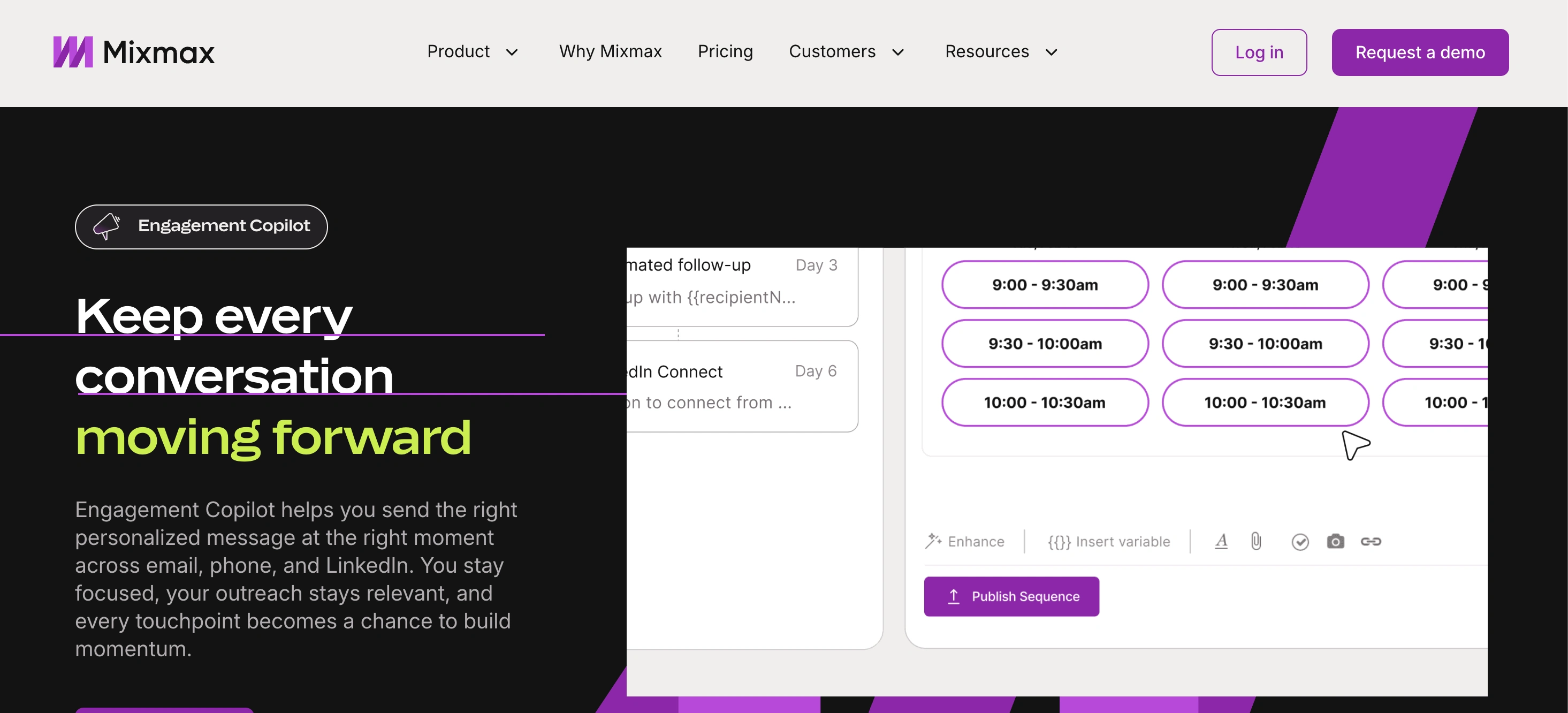
Best for: Gmail-first teams that want lightweight, email-centric sales engagement without heavy implementation.
Overview
Mixmax is a sales engagement platform built primarily around email workflows, scheduling, and multichannel follow-up. It enhances Gmail with structured sequences, task prompts, and CRM syncing to help reps manage outreach without switching tools.
The platform is commonly used by smaller teams or organizations that prioritize simplicity and inbox-based execution.
Core capabilities
- Multi-step email sequences
- Automated follow-up reminders
- Meeting scheduling and calendar integration
- Basic call logging and multichannel outreach support
- AI-assisted message drafting and personalization
- Engagement tracking and activity sync to CRM
- Searchable conversation history
Mixmax focuses on helping reps manage conversations directly from their inbox while maintaining structured outreach workflows.
Where it performs well
- Small to mid-sized teams
- Gmail-centric sales organizations
- Teams looking for fast setup with minimal configuration
Tradeoffs to consider
- Limited workflow governance compared to enterprise engagement platforms
- Coaching and analytics depth are lighter
- Not designed for complex outbound motions or layered RevOps controls
Integration context
Works with Salesforce and HubSpot CRM. Most effective when used as an inbox-based engagement layer rather than a full sales execution system.
Verdict
Mixmax is a streamlined sales engagement tool designed to structure email outreach and follow-up within Gmail. It is best suited for teams that value simplicity and fast adoption over advanced workflow control.
Reply.io
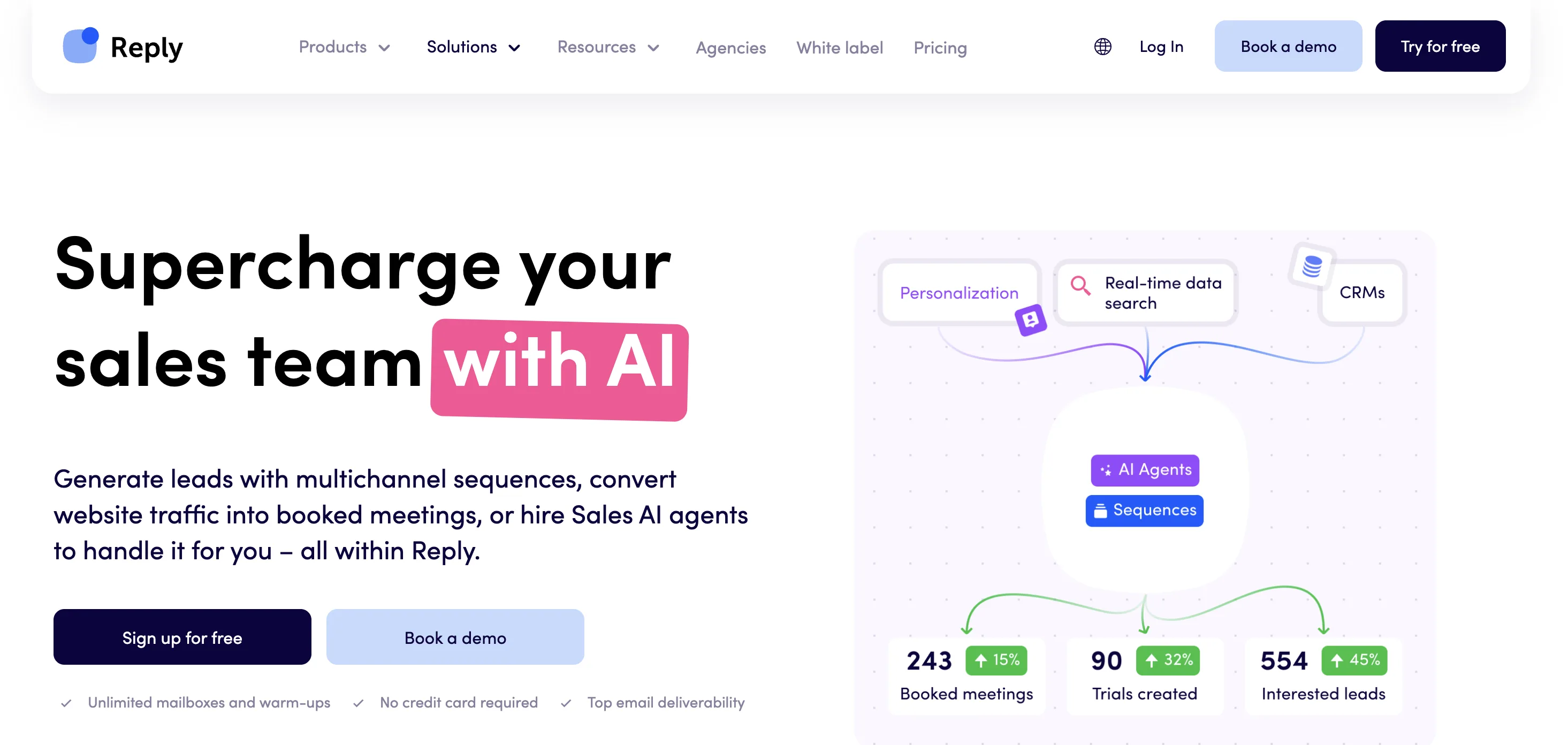
Best for: Outbound teams that want built-in prospect data combined with multichannel sales engagement automation.
Overview
Reply.io brings together contact sourcing, email deliverability tools, and multichannel sequencing in one outbound platform. It enables teams to build targeted prospect lists and execute automated outreach across email, LinkedIn, calls, SMS, and messaging apps from a centralized workspace.
The platform is commonly used by growth and outbound-focused teams that want both data access and engagement automation without stitching together multiple tools.
Core capabilities
- Multichannel conditional sequences (email, LinkedIn, calls, SMS)
- AI-assisted sequence creation and personalization
- Built-in contact database with real-time data search
- Email deliverability tools and warm-up capabilities
- Meeting scheduling within sequences
- Unified inbox for managing replies
- CRM integrations for activity sync
Reply emphasizes scalable outbound execution with integrated data and personalization support.
Where it performs well
- Teams that want prospect data and engagement in one system
- SDR-driven outbound organizations
- Companies scaling multichannel prospecting workflows
Considerations
- Works best when paired with a clearly defined outbound process
- Deliverability performance benefits from ongoing monitoring and optimization
- Advanced revenue inspection and post-meeting workflows are typically handled in complementary systems
Integration context
Integrates with Salesforce and HubSpot CRM, making it suitable as an outbound automation layer within a broader revenue stack.
Verdict
Reply.io is a sales engagement platform built for prospect sourcing and multichannel outbound automation. It is well suited for teams prioritizing scale, personalization, and integrated data within their outreach workflows.
Amplemarket
Best for: Outbound-driven teams that want AI-assisted prospecting, built-in data, and multichannel sales engagement in one platform.
Overview
Amplemarket combines B2B contact data, buying signals, and multichannel sequencing into a unified outbound sales engagement platform. It enables teams to identify target accounts, prioritize prospects based on intent signals, and execute personalized outreach across email, LinkedIn, calls, and social channels.
The platform is commonly used by growth-stage and enterprise teams looking to consolidate prospecting data and engagement workflows into a single environment.
Core capabilities
- Built-in global B2B contact database
- AI-driven buying and intent signals
- Multichannel sequence builder (email, LinkedIn, calls, social)
- AI-assisted personalization and message generation
- Email deliverability optimization and warm-up tools
- Task management and daily signal prioritization
- CRM integrations for contact and activity sync
Amplemarket emphasizes AI-guided prospecting and signal-based outreach to improve targeting precision and engagement consistency.
Where it performs well
- Teams scaling outbound prospecting
- SDR organizations leveraging signal-based selling
- Companies looking to combine data sourcing and engagement automation
Considerations
- Works best with a defined outbound motion and clear ICP
- Signal-based workflows benefit from ongoing optimization
- Revenue intelligence and post-meeting workflows are typically supported through complementary systems
Integration context
Integrates with Salesforce and HubSpot CRM, making it suitable as an outbound engagement and data layer within a broader revenue stack.
Verdict
Amplemarket is a modern sales engagement platform designed to combine AI-powered prospecting signals with multichannel outreach automation. It is well suited for teams focused on precision targeting, personalization at scale, and streamlined outbound execution.
Salesforce Sales Engagement
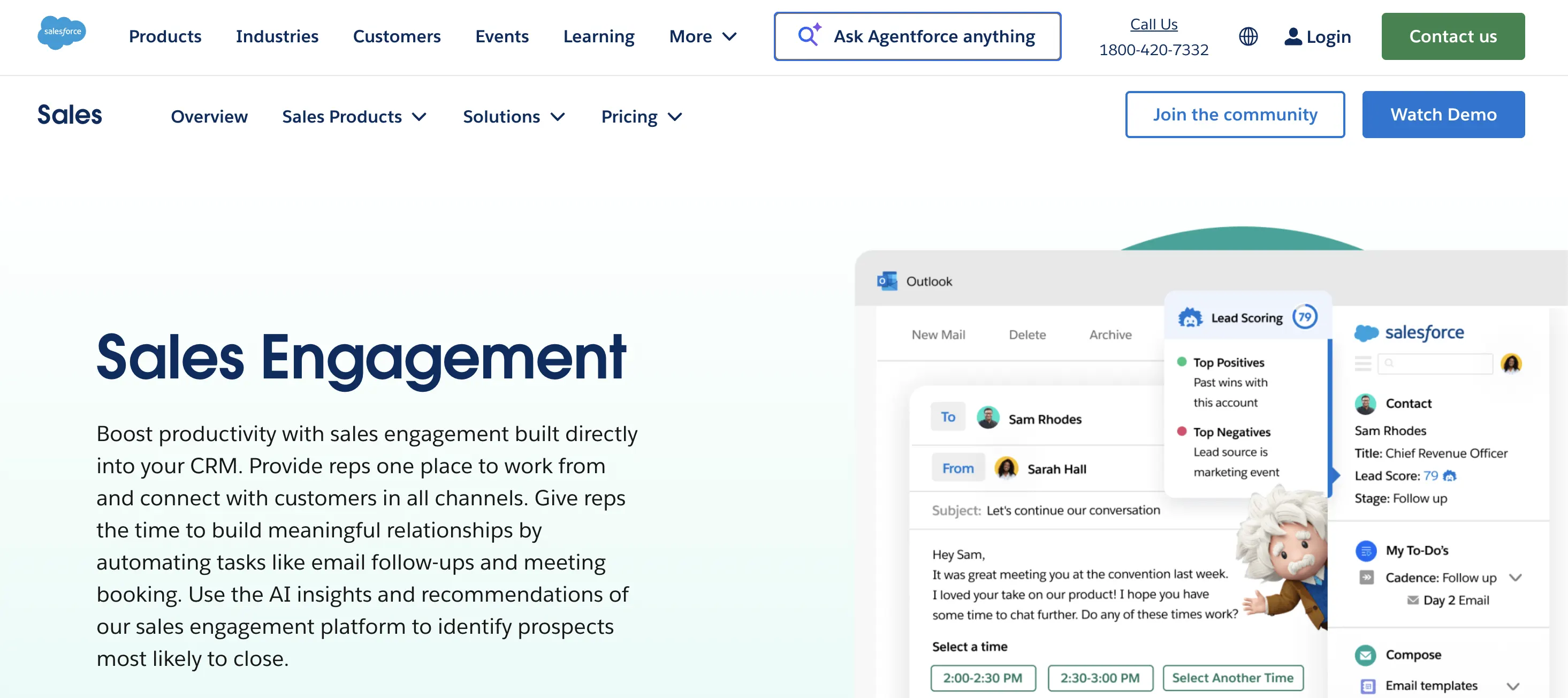
Salesforce Sales Engagement extends Sales Cloud with structured cadences, work queues, email productivity tools, and conversation intelligence. The defining characteristic is that execution happens directly inside Salesforce, using the same data model, permissions, and opportunity structure.
Among CRM engagement tools, Salesforce Sales Engagement stands out because execution remains fully native to the CRM data model.
For teams deeply invested in Salesforce, this keeps outreach, activity tracking, and pipeline management in one environment.
Core capabilities
- Cadence builder tied directly to Salesforce records
- Task queues and prioritized work lists inside the CRM
- Email templates, scheduling links, and inbox integration
- Automatic activity capture and logging
- Conversation intelligence with call transcription and insights
- AI-driven recommendations through Einstein
Because it shares Salesforce’s underlying architecture, activity, opportunity updates, ownership rules, and territory logic remain tightly aligned.
Where it performs well
- Enterprise environments with strict governance requirements
- Organizations that want sellers operating inside Salesforce rather than switching tools
- Teams already standardized on Salesforce reporting and Customer 360
Tradeoffs to consider
- Configuration and admin complexity
- Requires clean Salesforce data to deliver full value
- Additional modules increase cost and implementation scope
- Adoption depends heavily on CRM maturity
Integration context
Works best when Salesforce is the center of the GTM stack. Alignment across data, permissions, forecasting, and reporting is strongest in Salesforce-native environments.
Verdict
If Salesforce is your operational backbone and you want outreach embedded directly within it, this is a logical extension. Success depends on strong CRM ownership and disciplined implementation.
HubSpot Sales Hub
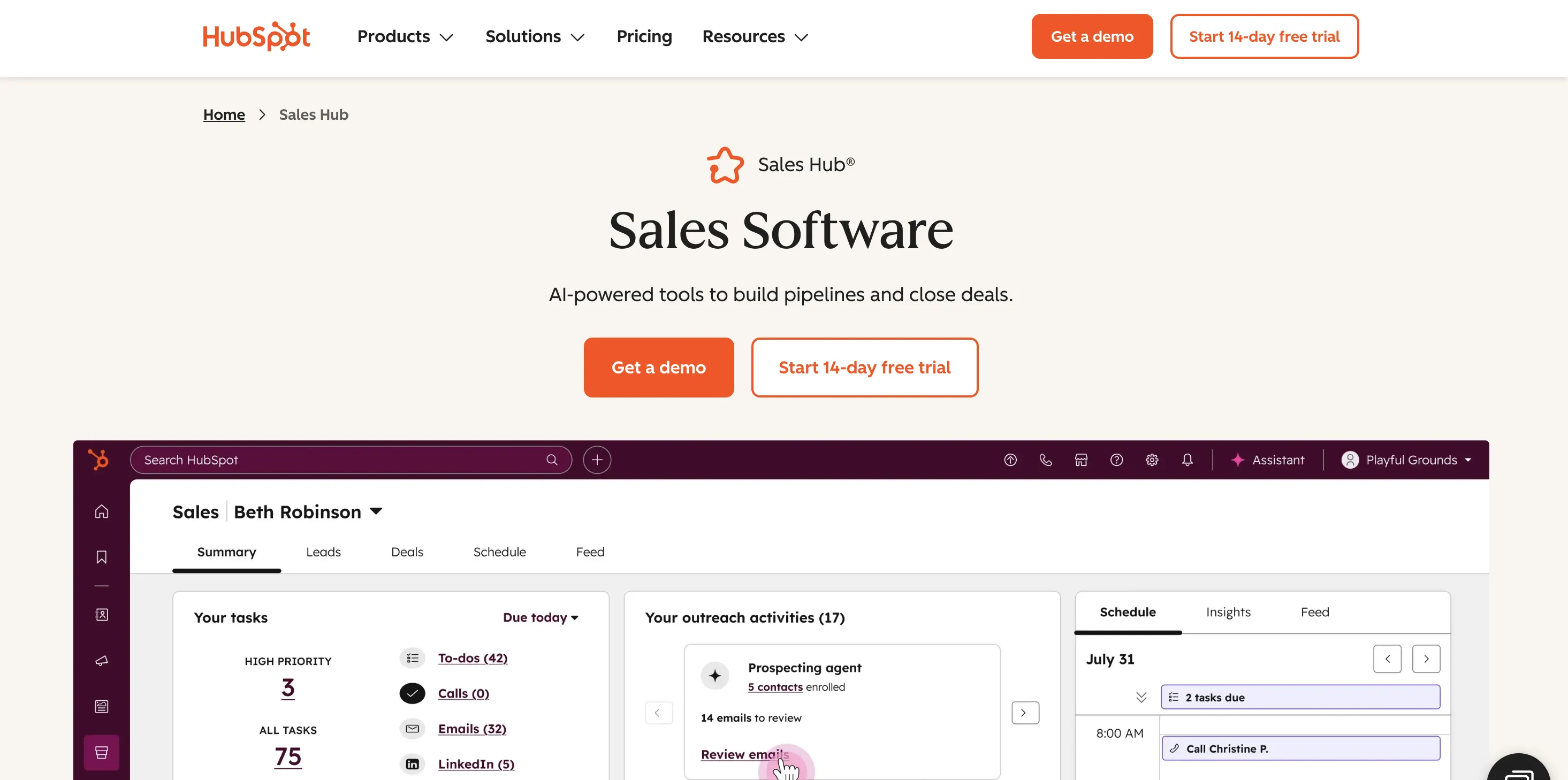
Best for: SMB and mid-market teams that want CRM and sales engagement in one unified platform with low operational overhead.
Overview
HubSpot Sales Hub combines CRM, sequence automation, pipeline management, reporting, and AI assistance in a single system. Unlike standalone engagement platforms, it is natively embedded within the HubSpot CRM, reducing integration complexity and administrative friction.
For teams prioritizing speed of setup and ease of use, this unified architecture simplifies rollout and adoption.
Core capabilities
- Built-in CRM with deal pipelines and lifecycle tracking
- Email sequences with automated follow-ups
- Meeting scheduling and calendar integration
- Power dialer with automatic call logging
- Conversation intelligence with transcription and coaching tools
- AI-assisted prospecting, deal scoring, and forecasting
- Reporting dashboards and pipeline analytics
- CPQ and quoting capabilities in higher tiers
Because engagement is native to the CRM, activities, deals, and reporting stay aligned without requiring external sync configuration.
Where it performs well
- Growing teams that want minimal implementation effort
- Organizations standardizing on HubSpot CRM
- Hybrid inbound and outbound sales motions
- Teams without dedicated RevOps or Salesforce administrators
Tradeoffs to consider
- Less granular workflow control compared to enterprise-focused platforms
- Limited customization depth for complex territory or governance models
- Advanced functionality tied to higher-tier plans
Integration context
Best suited for companies using HubSpot as their primary CRM and marketing automation platform. It reduces tool sprawl by consolidating engagement and CRM into one environment.
Verdict
HubSpot Sales Hub delivers a streamlined, integrated experience for teams that value simplicity and fast deployment. It is particularly strong for mid-market organizations that want engagement tightly connected to CRM without heavy configuration.
Best sales engagement platforms by team type and motion
The right sales engagement platform depends on your CRM architecture, outbound complexity, and operational maturity. Here’s the direct breakdown by use case.
Best for Salesforce-native enterprises
Salesforce Sales Engagement
If Salesforce is your operational backbone, this is the most tightly aligned option. Cadences, activity logging, and reporting stay fully embedded in the CRM data model.
Choose this if:
- You require strict governance and territory logic
- Reps work primarily inside Salesforce
- RevOps owns configuration and reporting
Also consider: Outreach or Salesloft if you want more advanced external sequencing layered on top of Salesforce.
Best for high-volume outbound SDR teams
Outreach
Built for structured, repeatable prospecting at scale. Strong multi-step sequencing, automation depth, and Salesforce alignment make it well suited for large SDR organizations.
Choose this if:
- You run complex outbound cadences
- Governance and consistency matter
- You have RevOps support for implementation
Also consider: Salesloft for slightly lighter operational management.
Best for structured outbound with coaching visibility
Salesloft
Combines cadence execution with activity analytics and conversation insights. Strong fit for SDR-driven teams that prioritize execution discipline and manager visibility.
Choose this if:
- You want cadence control plus coaching insight
- You value structured workflows tied to CRM reporting
- Your outbound team is process-oriented
Best for combining contact data and outreach in one platform
Apollo.io
Includes a built-in B2B database, sequencing, dialer, and deliverability tools. Designed for startups and growth teams consolidating prospecting and engagement into one system.
Choose this if:
- You don’t want a separate data provider
- Speed and simplicity outweigh deep governance
- You’re building outbound from the ground up
Best for AI-driven prospecting and signal-based outbound
Amplemarket
Pairs contact data and buying signals with multichannel automation. Strong for teams leaning into AI-assisted targeting and personalization at scale.
Choose this if:
- Signal-based prospecting is core to your strategy
- You want AI-guided targeting
- You’re consolidating data + engagement workflows
Best for multichannel automation with built-in prospect database
Reply.io
Combines contact sourcing, LinkedIn/email/SMS automation, and conditional sequencing in one outbound platform.
Choose this if:
- You want prospect data and automation in one system
- Multichannel outreach is central to your motion
- You prioritize scale and personalization
Best for SMB and mid-market simplicity
HubSpot Sales Hub
Unified CRM and engagement platform with minimal implementation overhead. Strong for teams prioritizing ease of deployment and consolidated tooling.
Choose this if:
- You use HubSpot CRM
- You want CRM + engagement in one system
- You lack dedicated RevOps resources
Best for Gmail-first teams that want lightweight engagement
Mixmax
Inbox-centric sequencing and scheduling layered directly into Gmail. Designed for smaller teams that value speed and minimal configuration.
Choose this if:
- Your team operates primarily in Gmail
- You want structured follow-ups without heavy rollout
- Simplicity matters more than advanced governance
Straighten out your sales engagement stack
Your sales engagement platform drives outbound execution. Avoma strengthens what happens during and after customer conversations.
By integrating directly with Salesforce, HubSpot, and leading engagement platforms, Avoma automates meeting capture, follow-up creation, CRM updates, and structured deal insights. This ensures that the activity generated by engagement tools translates into actionable intelligence inside your CRM.
The result is a more connected workflow, from first touch to closed-won, without adding operational overhead.
Extending engagement into meetings, follow-up, and CRM automation
Sales engagement platforms help teams create conversations. Avoma ensures those conversations translate into structured execution.
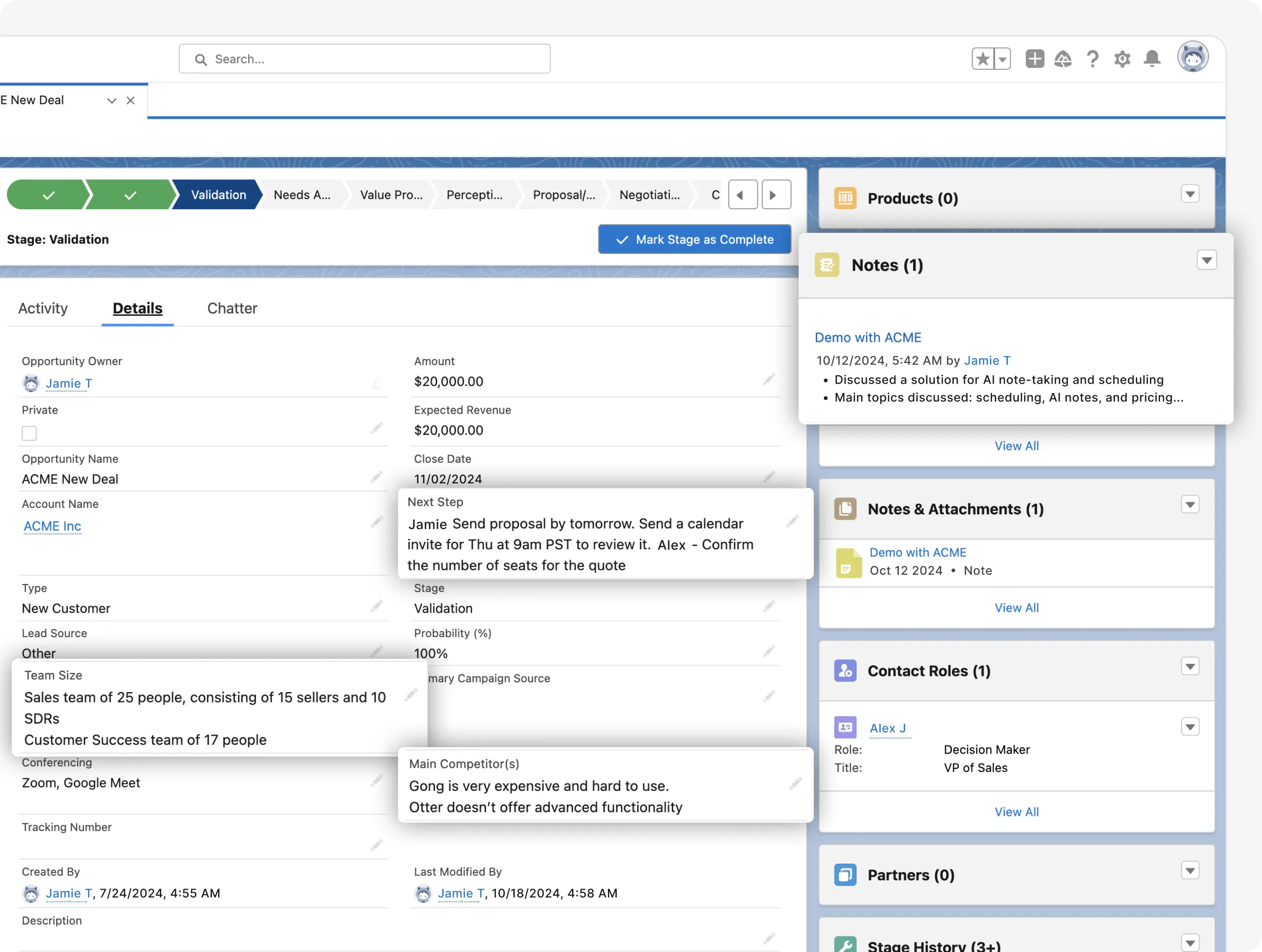
Many teams generate strong meeting volume. The opportunity then shifts to capturing insights, following up quickly, and keeping CRM data aligned with what was actually discussed.
Avoma's AI Meeting Assistant supports this workflow by:
- Automatically recording, transcribing, and summarizing meetings
- Generating personalized follow-up emails instantly
- Updating CRM fields and sales methodologies directly from conversations
- Creating a searchable knowledge base across calls
This keeps CRM data complete without additional manual work and gives managers structured deal context in real time. Engagement activity flows naturally into clean pipeline data and stronger forecast visibility.
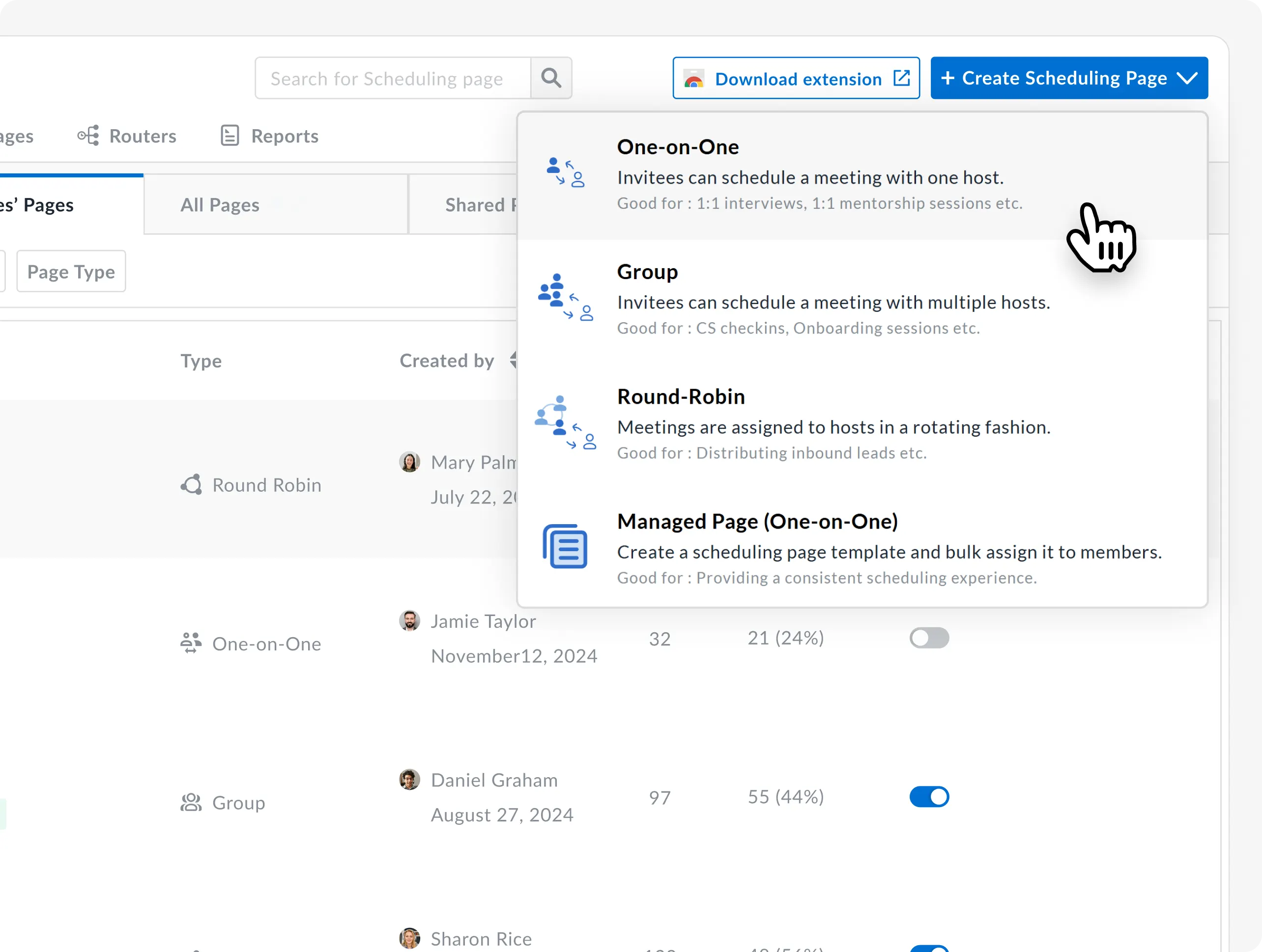
Extending engagement into booking and routing
Speed to lead and clean handoffs directly influence meeting conversion and pipeline velocity.
Avoma’s Scheduler and Lead Router integrate alongside your sales engagement platform to support:
- One-to-one booking
- Group scheduling
- Round robin assignment
- Ownership-based routing logic
This ensures meetings generated through outbound or inbound efforts are assigned accurately and instantly. SDR-to-AE handoffs stay structured, and routing logic reinforces accountability across the team.
Extending engagement into coaching and deal visibility
Sales engagement platforms provide visibility into activity and outreach performance. Avoma extends that visibility into conversation quality and deal context.
With Conversation Intelligence and Revenue Intelligence, teams gain:
- AI scorecards across calls
- Objection and talk-pattern insights
- Smart trackers for buying signals
- Deal risk indicators tied to conversation and activity trends
- Pipeline inspection grounded in real meeting data
This connects what happens inside meetings to how opportunities progress inside the CRM.
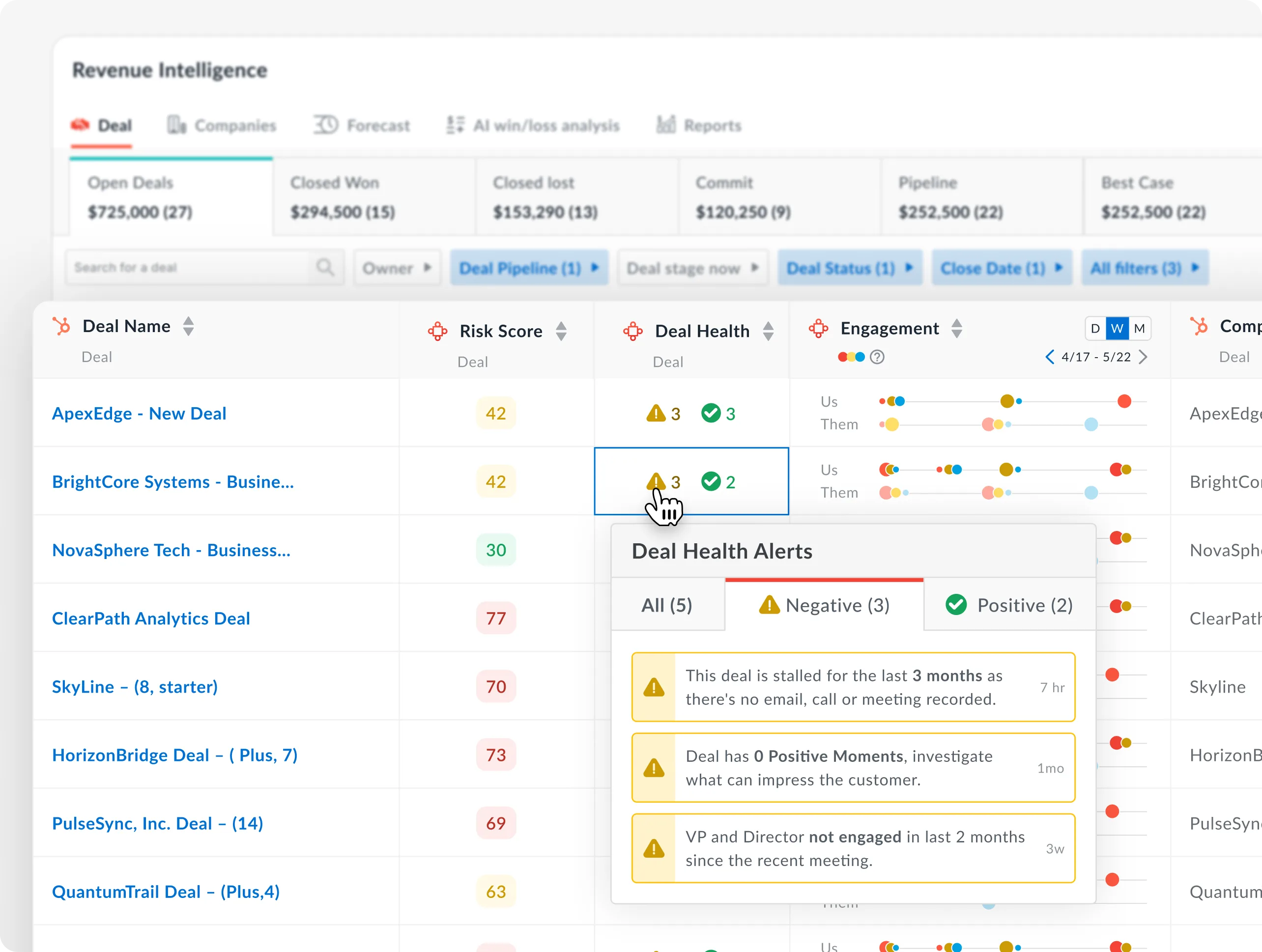
When outreach execution, conversation intelligence, and CRM automation work together, leaders gain a complete view of pipeline health — from first touch to forecast.
If your goal is higher adoption, cleaner CRM data, and less manual work across meetings and follow-up, Avoma strengthens your existing sales engagement stack by extending it into structured meeting intelligence and CRM automation.
Book a personalized walkthrough to see how Avoma integrates with your engagement platform and enhances your revenue workflow.
Reddit reality check: Common sales engagement platform problems
Search best sales engagement platform on Reddit and you’ll see something interesting.
The complaints are rarely about missing features.
They’re about weight. Setup. Data quality. Admin overhead. And whether the platform actually improves reply rates, connect rates, and pipeline — or just adds another system to manage.
Here’s how practitioners describe the category in their own words.
Structure versus usability
Enterprise platforms like Outreach are often described as powerful and structured.
Probably the most ‘grown-up’ platform out there. Tasking is solid, reporting is deep, and it’s good if your team needs structure.
That maturity comes with tradeoffs:
It can get heavy if you don’t maintain it, and the setup takes a bit, but once everything is in place it keeps reps consistent.
Outreach is frequently associated with strong governance, deep reporting, and disciplined outbound control. But it requires ongoing admin ownership. Without it, complexity compounds.
Salesloft tends to be described as slightly easier operationally:
Still strong for call workflows and coaching. Felt a bit easier to manage day to day than Outreach.
For many teams, the decision comes down to scale and cost:
Bigger SDR teams will probably get more value out of it.
The pattern: the larger and more structured the team, the more value they extract from governance-heavy platforms.
Data quality drives performance
One of the most consistent differentiators mentioned on Reddit isn’t sequencing.
It’s data.
Teams comparing Amplemarket, Salesloft, Outreach, and data providers like ZoomInfo and Seamless often focus on contact accuracy and deliverability:
I’ve used Amplemarket, Salesloft and Outreach and would say Amplemarket has far and away been the best. The data we get (phone numbers, emails) from Amplemarket is far and away the best I’ve got from any data provider. We rarely get any bounces. Deliverability is high and average response rate is double what I had on Outreach and Salesloft. Our connect rates over the phone are over 10%.
That feedback highlights a broader truth: engagement tooling is only as effective as the quality of the underlying contact data.
Sequencing cannot compensate for inaccurate emails or outdated phone numbers.
Even here, tradeoffs appear:
Only downside was the phone dialer… our numbers were flagged as spam so we had to get a separate dialer.
No platform is frictionless. But when data quality improves, response rates tend to follow.
Signals and AI-driven targeting
As outbound becomes more saturated, context matters more than cadence length.
Amplemarket is often referenced in conversations about signals and AI-guided prospecting:
We leaned on Amplemarket more once we needed signals and context, not just a place to run sequences. Their Duo Copilot made it easier to find targeted leads & reach out across many channels. Liked their LinkedIn automation and the use of AI to do all the heavy lifting.
There is still a learning curve:
Takes a bit to learn (especially prompting the AI to get tone etc.), but it reduced the number of tools we were stitching together.
The theme is consistent: signal-based outreach feels more relevant than purely volume-based automation.
Inbox-centric simplicity
Not every team needs enterprise-level governance.
Smaller or Gmail-centric teams often prefer lighter tools:
I use Mixmax to schedule follow-ups, track opens, and set rules for internal alerts when leads reply. The smart scheduling links are way better than the basic ones from other tools.
The appeal here is speed and minimal overhead. No heavy implementation. No long configuration cycles.
Similarly:
If you’re not on Salesforce, lighter tools like Apollo.io are fine for balancing volume with some personalization without a ton of setup.
For non-enterprise teams, ease of deployment and workflow simplicity often outweigh advanced reporting depth.
Personalization fatigue
Another recurring theme: automation without relevance fails.
One team that moved platforms shared:
Deep personalization is worthless if your AI references someone’s 3-year-old LinkedIn post.
Approval workflows and centralized inbox management were cited as key improvements:
Real win was email + LinkedIn sequences in one place and centralized inbox. Most tools forget replies actually happen.
Automation succeeds when it supports thoughtful outreach and not when it replaces it.
What Reddit conversations consistently reveal
Across threads, a few truths stand out:
- Enterprise teams value structure, reporting depth, and governance (Outreach, Salesloft).
- Data quality dramatically affects performance metrics (Amplemarket frequently cited for contact accuracy).
- AI-driven signals improve targeting when configured well.
- Smaller teams prioritize simplicity and inbox-based workflows (Mixmax, Apollo).
- Deliverability and response rates matter more than feature lists.
- Platforms feel expensive when ROI isn’t clearly tied to meetings and revenue.
Most sales engagement tools offer similar functionality. The real differences show up in usability, data quality, and operational weight.
Most center on:
- Operational heaviness
- Admin maintenance
- CRM friction
- Data quality
- Adoption
Adoption and measurable impact matter more than feature count.
Sales engagement platforms succeed when they improve reply rates, reduce manual work, and translate activity into pipeline — without overwhelming the team managing them.
Conclusion
The best sales engagement tools in 2026 are measured by workflow impact. They increase selling time, automate follow-up, maintain clean CRM data, and give leaders reliable visibility into pipeline health and forecast accuracy. When outreach, meetings, and CRM updates operate as one connected system, execution improves and revenue becomes more predictable.
Modern revenue teams prioritize platforms that reduce administrative drag and turn conversation data into structured intelligence.
If you’re ready to strengthen meeting workflows, automate CRM updates, and connect engagement directly to revenue outcomes, explore how Avoma supports that evolution. Book a personalized walkthrough of Avoma.
Frequently Asked Questions
A CRM stores account, contact, and opportunity data, while a sales engagement platform manages outbound workflows such as sequences, task queues, and multichannel outreach. Engagement tools focus on execution and follow-up automation, whereas CRMs prioritize pipeline tracking, forecasting, and reporting.
Most organizations use both together, with the engagement platform syncing activity back to the CRM to maintain accurate pipeline visibility and performance tracking.
Sales engagement platforms can improve or harm deliverability depending on configuration and data quality. Features like email warm-up, domain authentication, throttling, and bounce monitoring help protect sender reputation.
However, poor contact data, aggressive sequencing, or high-volume automation can lead to spam filtering and domain issues. Ongoing monitoring and list hygiene are critical for maintaining inbox placement and response rates.
Small teams can benefit from structured follow-ups, task automation, and CRM syncing, particularly when outbound prospecting is consistent. Lightweight tools with minimal setup are often better suited for SMB environments.
However, if outbound volume is low or workflows are simple, CRM-native sequencing features may be sufficient. The return typically depends on whether automation meaningfully reduces manual work and improves meeting conversion.
Evaluation should extend beyond open and reply rates. More meaningful indicators include meeting conversion rate, pipeline created per rep, activity-to-opportunity ratio, CRM data completeness, and forecast alignment.
Operational metrics such as admin overhead, sequence adoption, and activity sync accuracy also influence long-term impact. The strongest platforms connect engagement activity directly to revenue outcomes rather than isolated engagement metrics.
AI features can assist with personalization, signal-based targeting, and task prioritization. Their effectiveness depends on data quality, accurate prompting, and alignment with the sales motion.
AI-driven outreach may improve relevance when using real-time intent signals, but generic automation often underperforms. Results vary based on implementation discipline and ongoing optimization rather than the presence of AI alone.
Implementation timelines vary by organizational complexity. CRM-native or lightweight tools may deploy within weeks, while enterprise platforms with advanced governance often require longer configuration cycles.
Factors affecting rollout include CRM cleanliness, territory rules, integration requirements, sequence design, and user training. Ongoing administration and optimization should also be considered part of the operational timeline.
Inbound-focused teams may rely less on structured outbound sequencing but can still benefit from automated follow-ups, task queues, and meeting coordination.
If lead volume is high and response speed affects conversion, engagement workflows can improve consistency. However, heavily outbound-oriented features may be underutilized in primarily inbound sales models.
Sales engagement platforms contribute to forecasting when activity data reliably syncs to the CRM and reflects real prospect engagement. Consistent logging of calls, emails, and meetings improves visibility into deal momentum.
When engagement activity aligns with opportunity stages and conversation insights, managers gain clearer context for pipeline inspection. Forecast accuracy improves when outreach, meetings, and CRM data remain synchronized.


Dive into Our Latest
Avoma Insights.


What's stopping you from turning every conversation into actionable insights?


