
AI sales assistant software: What it is and what it is not

Table of Contents:
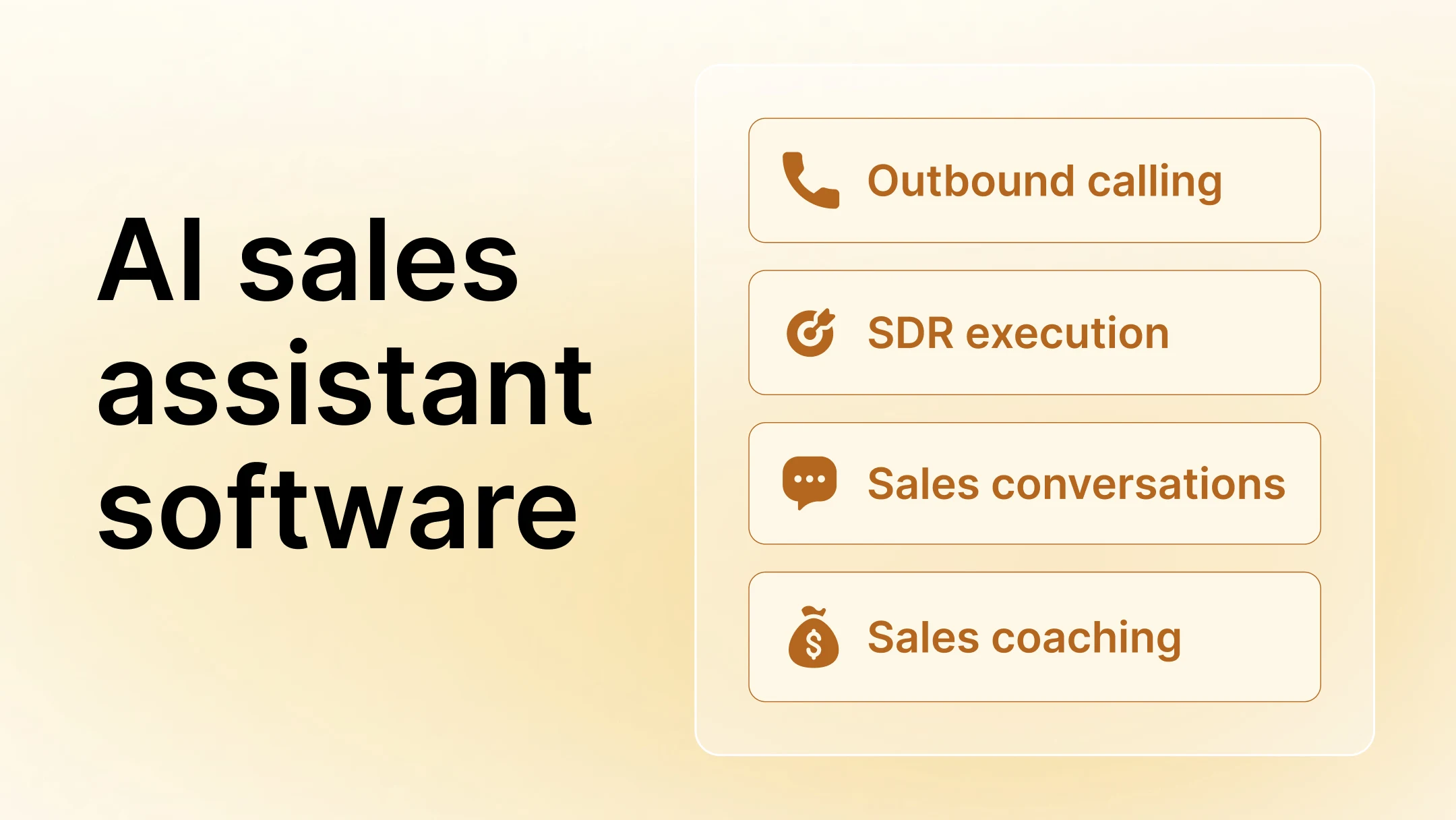
Nearly every sales tool now claims to be an “AI sales assistant.” CRMs say it. Sequencers say it. Sales call recording tools say it. Yet reps are still buried in manual work updating fields, chasing follow ups, and jumping between tools instead of selling. If AI is everywhere, execution shouldn’t feel this heavy.
That gap is what’s driving interest in AI sales assistant software. Sales leaders aren’t looking for smarter dashboards. They’re looking for leverage. They want to know which tools actually help reps execute faster, reduce workload, and increase output, and which ones just repackage existing workflows with an AI label.
The issue is that the category is poorly defined. Systems of record, automation platforms, and insight tools all get grouped together, even though they solve very different problems. Buyers end up comparing CRMs to dialers to coaching tools as if they’re interchangeable. They’re not.
Before evaluating vendors or features, the category itself needs clarity. What actually qualifies as AI sales assistant software and what clearly does not.
What is AI sales assistant software?
AI sales assistant software is software that uses AI as the core engine to act on a seller’s behalf, guide live execution, or directly reduce sales workload. It doesn’t just store data, automate rules, or surface insights. It helps reps actually get work done.
In practice, this shows up in moments where sellers usually slow down. Prospect research. Dialing. Follow ups. Call summaries. Coaching after meetings. A real AI sales assistant steps into those moments and either executes the task, guides the rep in real time, or removes steps entirely. The output is time saved and higher throughput, not just better reporting.
This is where many tools get misclassified. If AI only analyzes activity after the fact or recommends next steps that still require manual action, it’s an insight tool. If it triggers workflows based on fixed logic, it’s automation. An AI sales assistant sits closer to the work itself and changes how that work gets done.
That distinction matters because buyers aren’t shopping for intelligence. They’re shopping for relief from execution drag.
Next, we need to be just as clear about what doesn’t qualify as an AI sales assistant.
What an AI sales assistant is not
An AI sales assistant is not any of the following:
- A system of record
- CRMs, even with AI features, primarily store data and enforce process.
- Reps still have to do the work first, then log it after.
- Deal scoring or activity suggestions don’t change execution effort.
- CRMs, even with AI features, primarily store data and enforce process.
- A reporting or analytics layer
- Dashboards, forecasts, and conversation insights explain performance.
- They operate after the work is done.
- They don’t reduce the number of actions required to produce results.
- Dashboards, forecasts, and conversation insights explain performance.
- Rules based automation
- Pre built sequences, static workflows, and trigger based actions.
- Helpful for consistency, but not adaptive in live sales moments.
- Automation runs processes. It doesn’t assist judgment or execution.
- Pre built sequences, static workflows, and trigger based actions.
- Marketing automation repackaged for sales
- Templated emails and batch sends are not assistance.
- If logic is fixed and non contextual, AI is not doing the work.
- Templated emails and batch sends are not assistance.
Simple test:
If a rep still has to interpret an insight and manually act on it, the tool is not an AI sales assistant.
With those exclusions clear, the real category becomes much easier to define.
The three traits every real AI sales assistant shares
Every legitimate AI sales assistant has three traits in common. If one is missing, the tool is either automation, analytics, or infrastructure — not an assistant.
AI is core to the product
AI sales assistant software is built around AI as the primary engine, not an add on.
- The product does not fall back to static rules or workflows when AI is removed.
- Behavior adapts based on context, inputs, and outcomes.
- The assistant improves decisions or execution over time, not just speed.
If AI is only enhancing existing features, it’s a feature set. Not a category.
It assists or replaces part of sales execution
A real AI sales assistant touches the work itself.
- Prospecting and research
- Outbound execution across channels
- Live calling or follow up
- Coaching tied to real interactions
If reps still have to do every step manually, AI isn’t assisting. It’s observing.
It acts, guides, or executes
AI sales assistants don’t stop at recommendations.
- They take action directly, like dialing or drafting follow ups.
- They guide reps in real time, not after the fact.
- They remove steps from the workflow instead of adding interpretation.
This is the difference between “AI that tells you what to do” and “AI that helps you do it.”
Once these traits are clear, the category stops being abstract. You can organize AI sales assistant software by the kind of execution it supports.
Categories of AI sales assistant software
Once you strip away the buzzwords, AI sales assistant software falls into a few clear categories based on where the assistant shows up in the sales workflow. These tools are not interchangeable. Each one is designed to remove friction from a specific part of execution.
Understanding the category matters more than the vendor name. If you pick the wrong category, even the best tool won’t move the needle.
AI outbound calling assistants
These assistants focus on one thing: helping reps have more live conversations.
They reduce the manual effort of dialing by automating call pacing, filtering out bad numbers and voicemails, and routing reps to the next best call without list management. The value shows up immediately in higher talk time and more connects per day.
Common examples include Orum and Nooks. These tools are best suited for teams where phone based outbound is a core motion and connect rate is the main constraint. For teams that want the AI to handle calls end to end, Plivo offers voice agents that run full conversations autonomously.
Orum
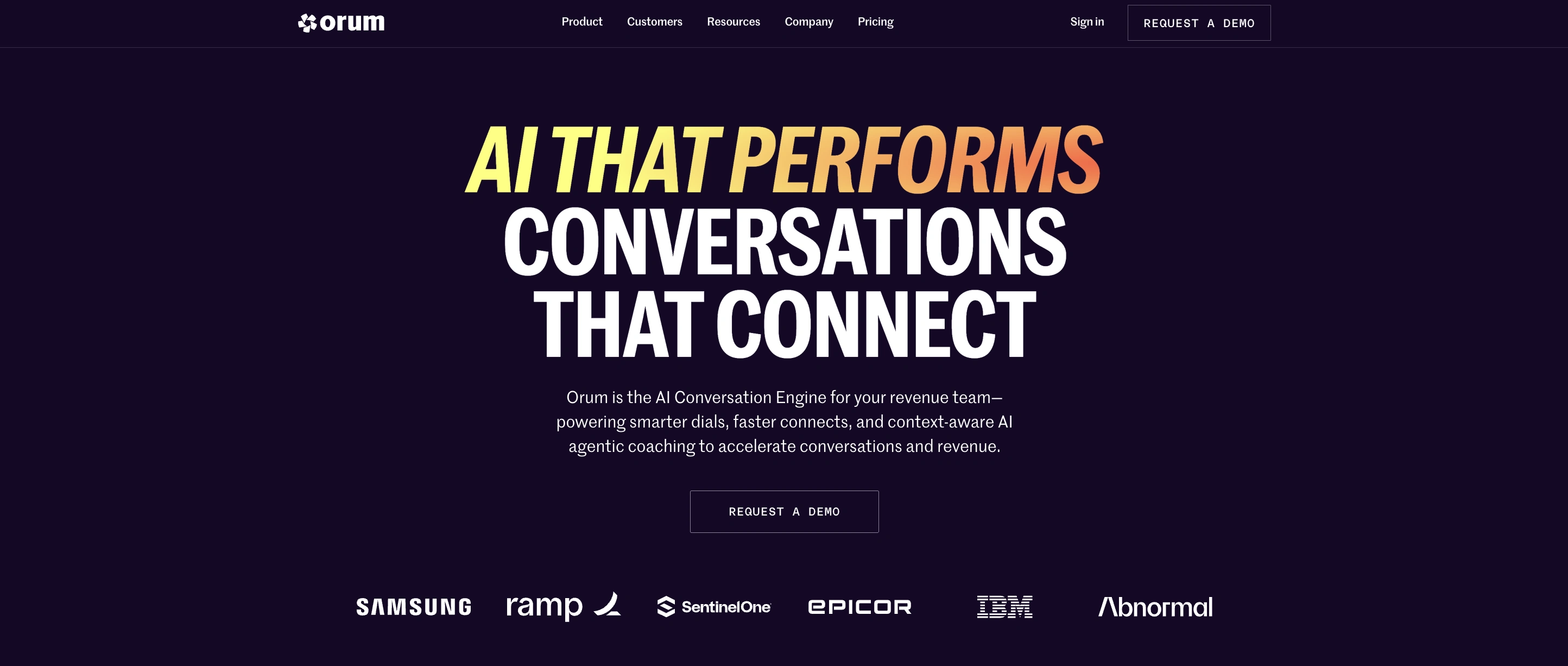
What Orum is typically used for
Orum is used by outbound teams where phone volume and connect rate are direct drivers of pipeline.
It handles parallel dialing, automatically skips voicemails and bad numbers, and keeps reps moving from one call to the next without manual steps. The value shows up quickly in increased talk time.
How pricing usually works
Orum doesn’t publish fixed pricing. Teams typically go through a demo and receive a quote based on usage and configuration, which is common for high volume dialers.
Where teams feel friction
Reviews note that Orum works best with clean data and a clear calling strategy. Teams should expect some rep behavior change and operational setup before seeing consistent gains.
Nooks
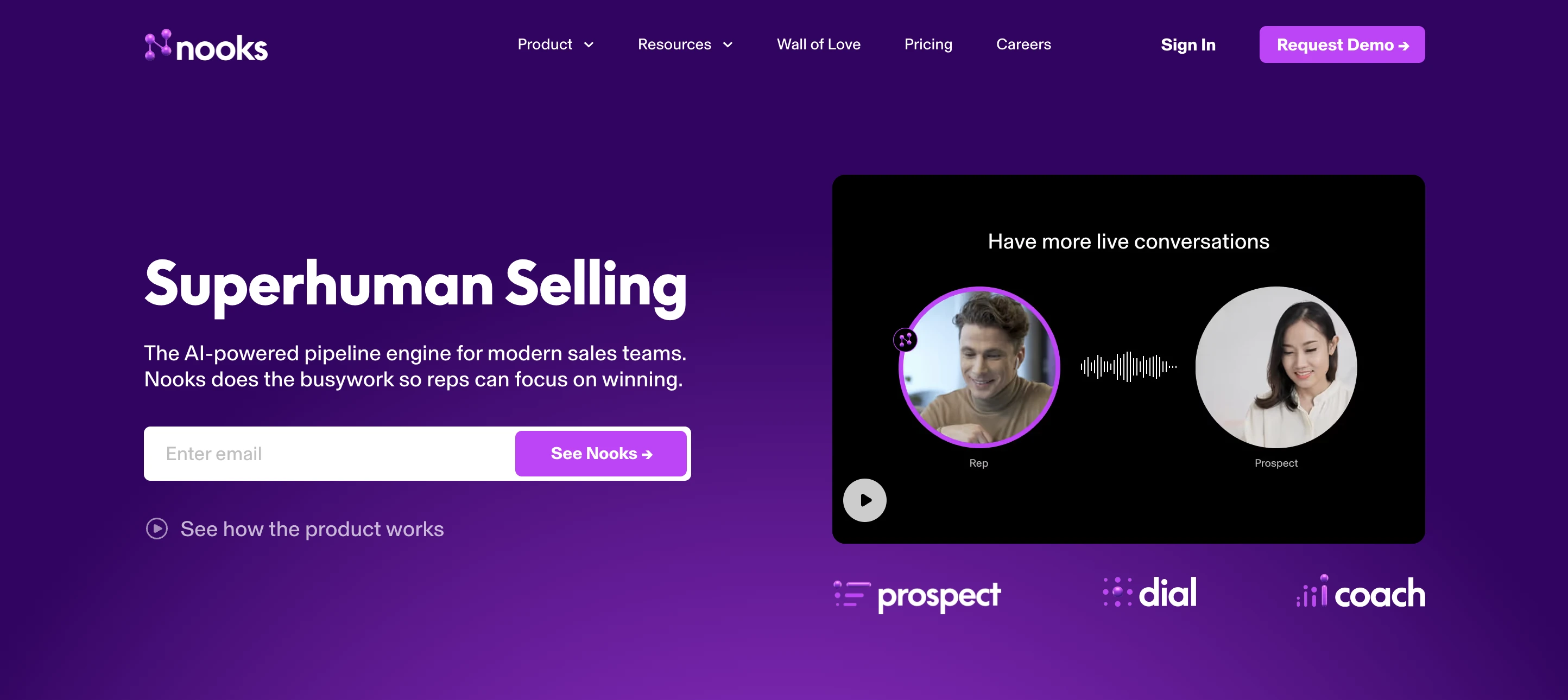
How teams use Nooks
Nooks approaches outbound calling with parallel dialing plus a virtual sales floor for real time visibility.
Teams adopt it to boost call volume while giving managers a live view into rep activity and coaching moments.
What stands out
The collaboration and manager visibility features are often cited as differentiators, especially for larger SDR teams.
What to plan for on pricing
Pricing isn’t publicly listed, so buyers should expect a sales led process where cost depends on seats and usage.
Where limitations show up
Reviews point to reporting and list handling as areas that require strong process discipline to avoid friction.
AI SDR and outreach execution assistants
These assistants reduce the workload required to run outbound across email, phone, and other channels.
They help with prospect research, personalization, sequencing, and task prioritization. Instead of reps spending hours preparing outreach, the assistant handles much of the setup and execution logic so reps can focus on sending and engaging.
Tools like Apollo, Amplemarket, and Regie.ai fall into this category. They are most useful for teams trying to scale outbound without adding more SDR headcount.
Apollo
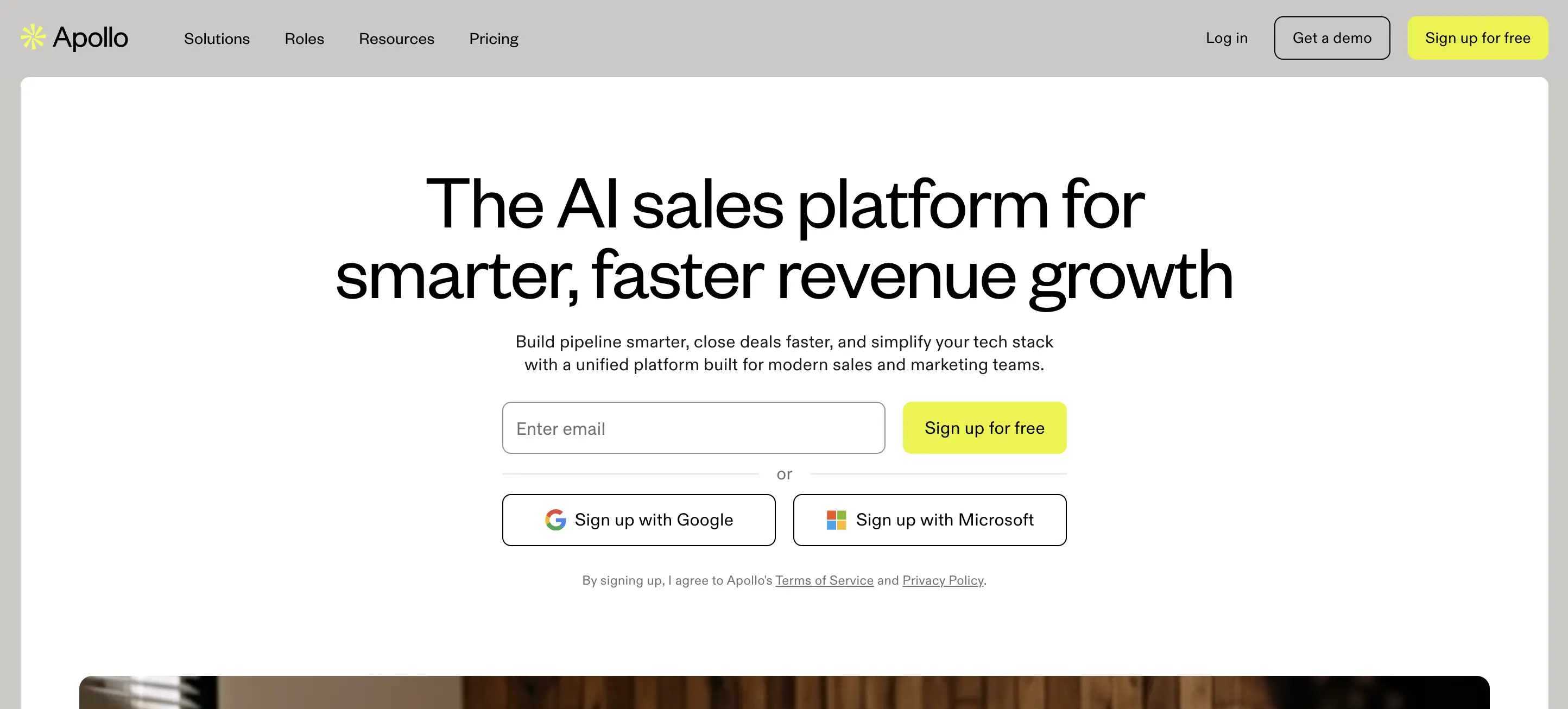
What Apollo is typically used for
Apollo is commonly chosen by teams that want prospecting, enrichment, and outreach in one platform.
Where it delivers value
The biggest draw is accessibility. Teams can start with a free plan to test workflows, then expand into paid plans as usage grows.
How pricing scales
Apollo outlines paid tiers on its pricing page, but exact dollar amounts aren’t fully transparent. Most teams should expect a sales conversation as they scale.
Where teams hit limits
Reviews often mention data consistency and feature depth as tradeoffs, particularly for teams running more complex outbound motions.
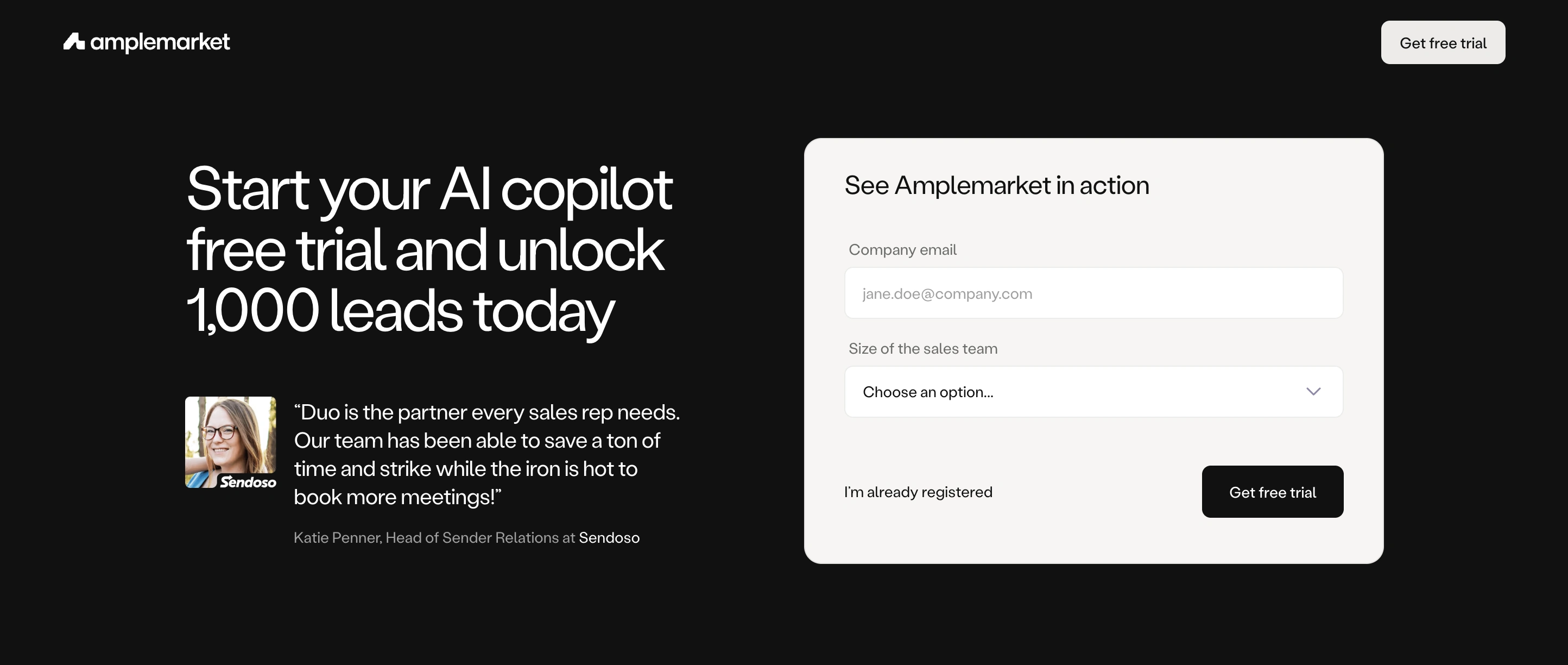
AmpleMarket
How AmpleMarket fits into outbound
AmpleMarket focuses on AI assisted prospecting and multichannel outbound, with email as the primary motion.
Why teams adopt it
Teams value the tight connection between research and execution, along with built in deliverability monitoring.
What pricing looks like
The Startup plan is listed at $600 per month on an annual contract and includes two users. Higher tiers are custom priced, and a free trial is available.
Where friction appears
Calling workflows are less mature, and some reviews mention UI and performance issues compared to more specialized tools.
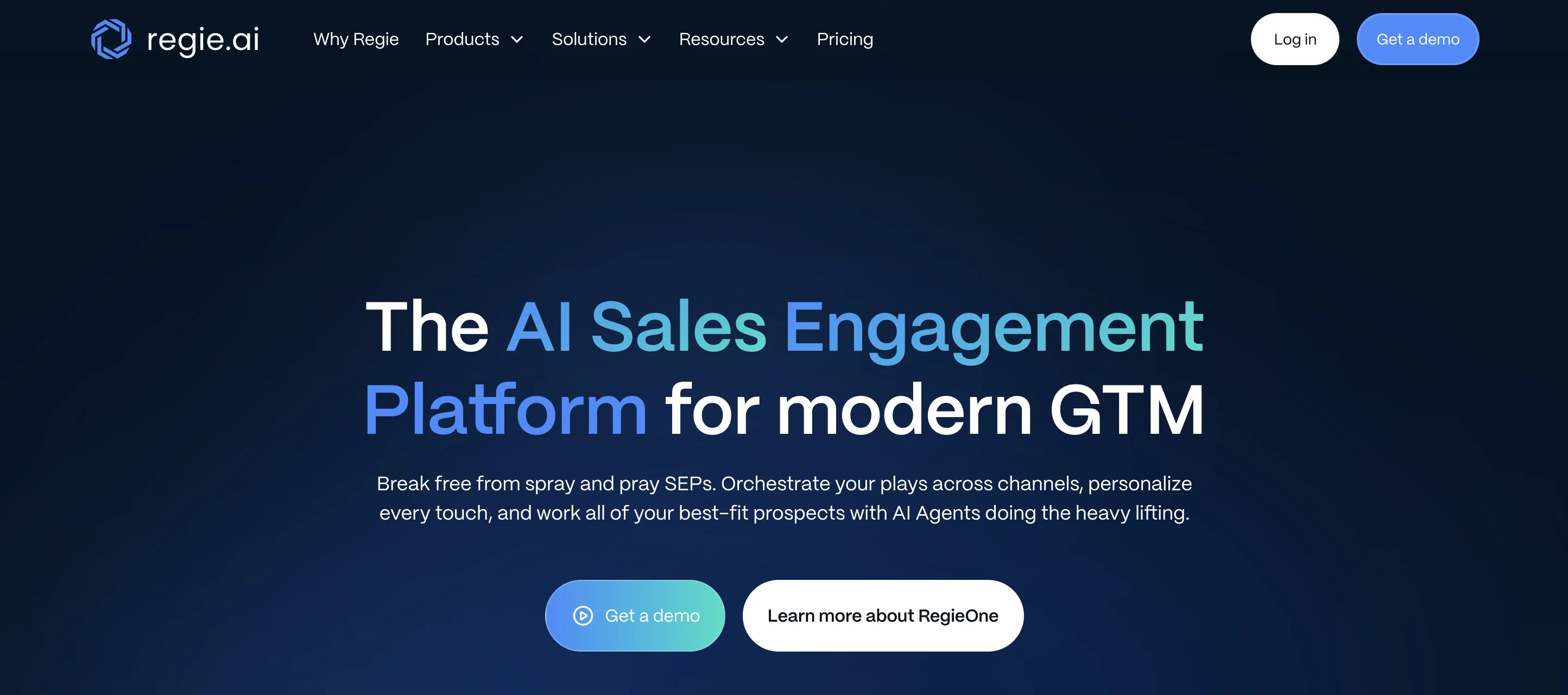
Regie.ai
Where Regie.ai is typically used
Regie.ai is often layered on top of an existing engagement platform to reduce manual outbound work through AI agents.
What teams get from it
It offloads research, prioritization, and follow ups, helping teams scale personalization without adding headcount.
How pricing is positioned
Regie.ai starts at $35K annually for its AI Agents package, with additional bundles available for teams with broader needs.
What reviews flag
AI generated content still benefits from human review, and strong messaging inputs are required to get consistent quality.
AI sales conversation and meeting assistants
These assistants operate during and after sales conversations.
They record meetings, generate summaries, draft follow ups, and surface coaching signals based on what actually happened in calls. The primary benefit is reduced admin work and more consistent follow through after meetings.
Examples include Avoma, Gong, and Chorus. These tools help teams improve execution quality and coaching without relying on manual note taking or manager call reviews.
Avoma
What Avoma is typically used for
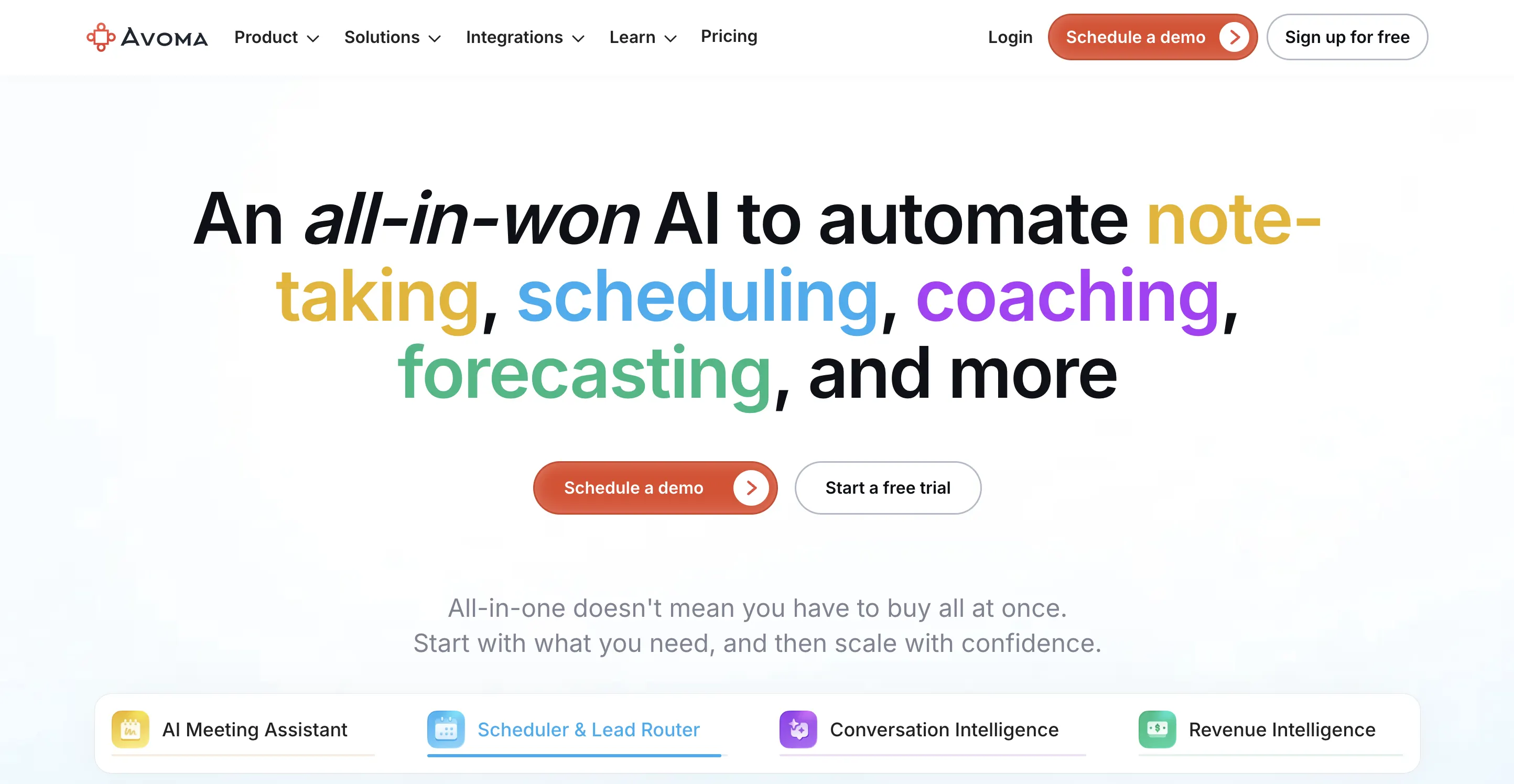
Avoma is used by sales teams that want AI sales assistant software embedded directly into meetings and pipeline workflows. It captures structured conversation data and turns it into execution ready outputs synced to CRM.
Where it delivers value
Teams rely on Avoma to automatically generate call summaries, draft follow up emails, sync notes and action items to CRM, and surface coaching signals from real conversations. The impact shows up in faster follow ups, cleaner CRM hygiene, and more consistent deal inspection without extra admin work.
Pricing context
Pricing is publicly listed, starting at $19 per recorder seat per month on an annual contract. Higher tiers unlock advanced AI and revenue intelligence workflows. View only users are free, and a 14 day trial is available.dea
Where teams hit limits
Full value for sales teams typically requires alignment with CRM processes and manager workflows, not just call recording.
Gong
How Gong is typically used
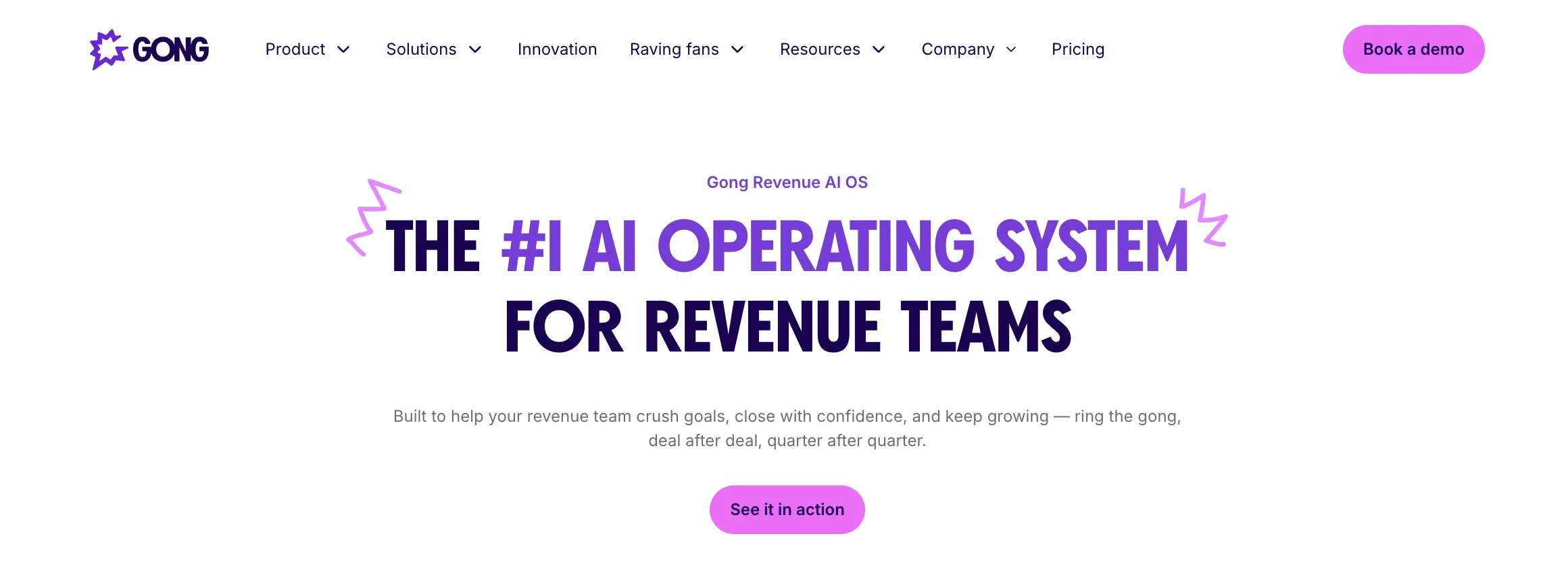
Gong is positioned as a revenue intelligence platform centered on conversation data.
Where it delivers value
Teams rely on Gong for deal inspection, coaching, and forecasting support, particularly in larger sales organizations.
What to expect on pricing
Pricing is quote based and usually includes per user licenses plus a platform fee.
What teams should plan for
Cost, rollout effort, and ongoing governance come up frequently in reviews, especially for smaller teams.
Chorus (by ZoomInfo)
Where Chorus fits best
Chorus is commonly adopted by teams already invested in ZoomInfo.
What teams get out of it
It provides recording, transcription, summaries, and CRM sync, with added value for teams using ZoomInfo data.
How pricing works
Pricing isn’t publicly listed and is handled through ZoomInfo sales.
Where concerns surface
Reviews point to recording reliability and pricing concerns when compared with newer alternatives.
AI sales coaching and practice assistants
These assistants focus on improving rep performance rather than generating pipeline.
They simulate role plays, handle objection practice, and provide feedback on responses. This allows reps to practice independently and managers to scale coaching without running every session live.
Hyperbound and Second Nature are common examples. These tools are best positioned as performance multipliers, not outbound engines.
Once you understand these categories, choosing an AI sales assistant becomes much simpler. The right tool is the one that removes friction from your biggest execution bottleneck, not the one with the most features.
Hyperbound
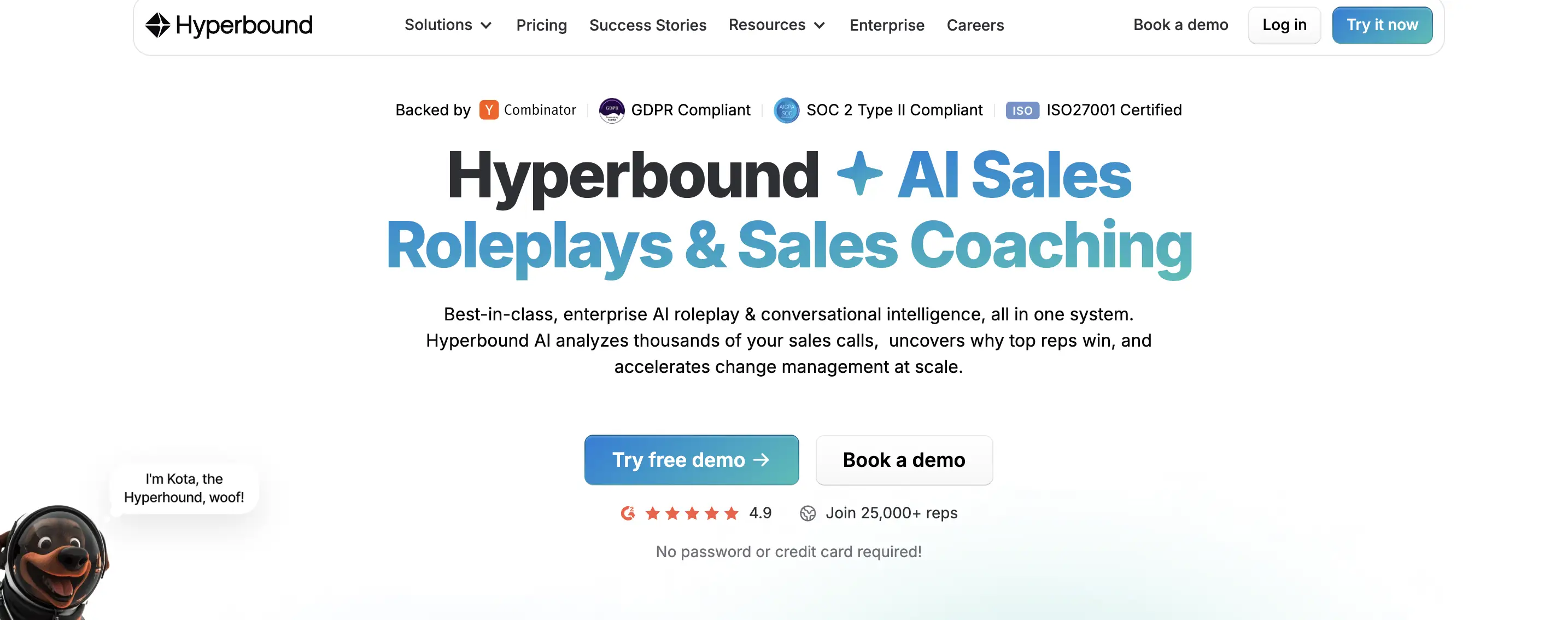
How teams use Hyperbound
Hyperbound is used for scalable role plays and daily practice, especially during onboarding and ramp.
Why it works
Teams cite realistic scenarios and ease of adoption as key strengths.
What pricing looks like
There’s a free plan for getting started, with paid plans offered on a custom basis as teams scale.
Where teams feel limits
Reporting depth and scenario management are common review themes.
Second Nature
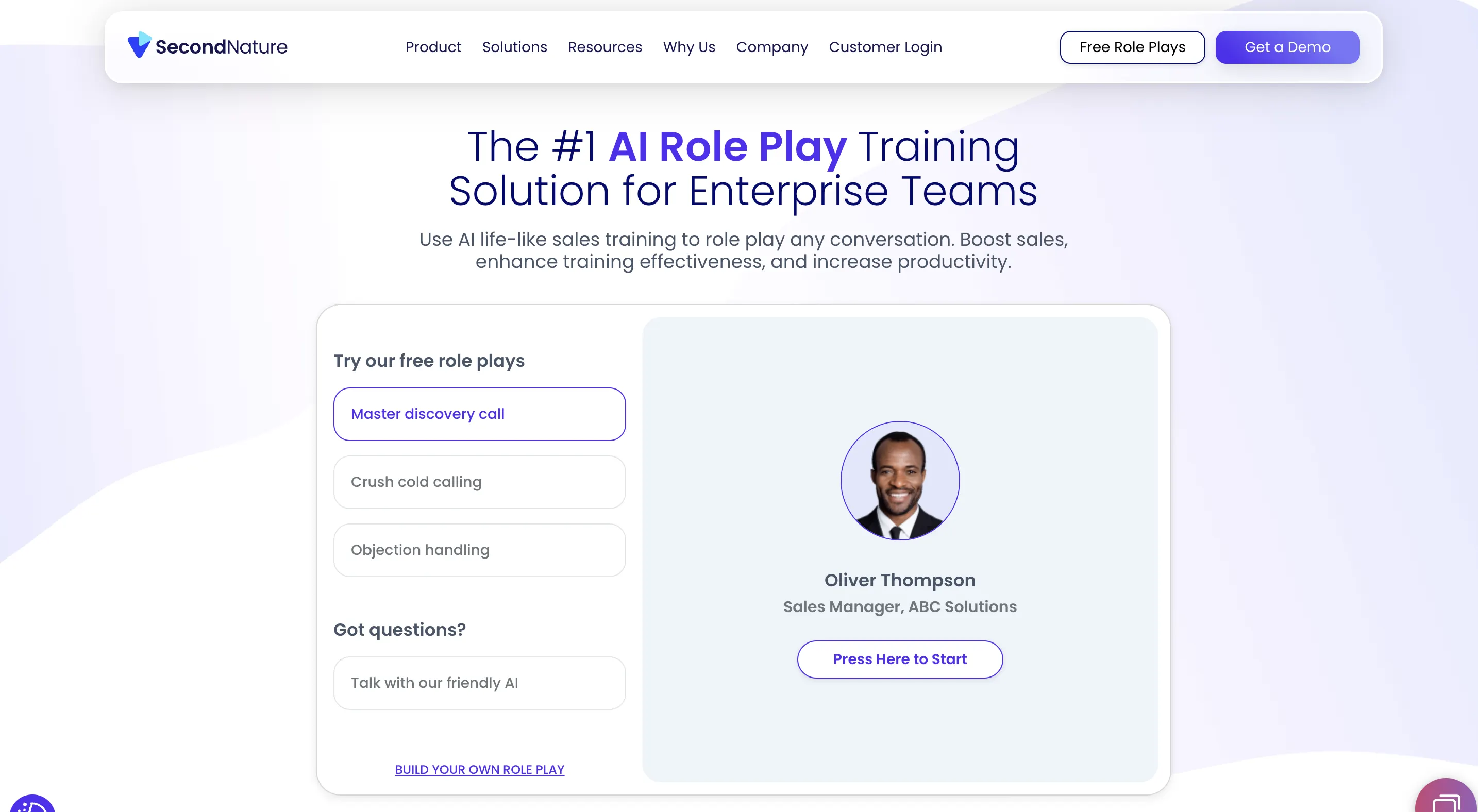
What Second Nature is designed for
Second Nature focuses on conversational skill development and pitch consistency.
Where it adds value
Teams use it to standardize training through AI role plays and structured feedback.
How pricing is handled
Pricing isn’t publicly listed, and most teams go through a demo and quote process.
What reviews mention
Learning curve, scoring rigidity, and UX quirks come up alongside positive training outcomes.
How to choose the right AI sales assistant for your team
Choosing the right AI sales assistant comes down to matching the tool to your biggest execution bottleneck. Teams get the most value when AI reduces real workload, not when it adds another layer to manage. Start with where reps lose time today, not with features.
Where does your team actually get stuck?
Most buying mistakes happen because teams start with tools instead of friction.
- If reps spend most of their day dialing and list managing, outbound calling assistants deliver immediate lift.
- If outbound stalls because of research, prep, and personalization, SDR and outreach execution assistants matter more.
- If sellers lose time after meetings, conversation assistants remove admin work.
- If ramp and consistency are the issue, coaching assistants are the right place to invest.
The right assistant maps to a single, obvious slowdown in your workflow.
Which work should AI take over vs support?
Not every task should be fully automated.
Some parts of sales execution benefit from AI taking action outright, like dialing or drafting follow ups. Other areas work better when AI guides or supports, such as coaching or call review. Teams see better adoption when AI removes steps without removing control.
If reps feel like they’re supervising the tool instead of being helped by it, something is off.
How much change can your team absorb?
AI sales assistants change how work gets done.
Tools like dialers and AI agents require behavior shifts and process discipline. Lighter weight assistants, like meeting summaries or coaching tools, are easier to adopt but deliver narrower impact. The best choice balances upside with your team’s ability to adapt.
Adoption failure usually looks like “the tool works, but nobody uses it.”
Why stacking assistants too early creates problems
Adding multiple assistants before one is fully operational creates overlap and confusion.
Teams often buy an outbound assistant, a conversation assistant, and a coaching tool at the same time, then struggle to attribute impact. Starting with one assistant tied to a clear metric makes it easier to prove ROI and expand intentionally.
Execution leverage compounds. Tool sprawl does not.
What a good buying decision looks like
A strong decision has three traits:
- A clearly defined execution problem
- One assistant mapped to that problem
- A success metric tied to rep workload, not just activity
When AI sales assistants work, reps feel it first. Less manual work. Fewer context switches. More time selling.
That’s the signal you’re looking for.
Final takeaway: AI assistants work when they reduce human load
AI sales assistants work when they take pressure off reps, not when they add another layer of tooling to manage. The most effective teams use AI to remove manual steps from execution, not to generate more insights that still require human follow through.
That starts with a simple audit. Where do reps lose time today? Dialing. Research. Follow ups. Post call admin. Ramp. The right assistant targets one of those areas directly and measurably. When AI is doing real work, reps feel the impact immediately in their day to day workflow.
This is also why clarity matters more than hype. CRMs, automation tools, and analytics platforms still play important roles, but they are not assistants. Assistants act, guide, or execute inside the workflow itself. That distinction is what separates tools that look impressive in demos from tools that actually change output.
For teams evaluating AI sales assistant software, the goal isn’t to adopt more AI. It’s to reduce human load where it slows execution. When that happens, productivity improves without burning out the team, and AI becomes leverage instead of noise.
Frequently Asked Questions
The right AI sales assistant software is chosen by identifying the single largest execution bottleneck in your workflow and selecting one assistant mapped directly to that problem.If reps lose time dialing, choose a calling assistant. If research and personalization slow outbound, choose an SDR assistant. If post-meeting admin is heavy, choose a conversation assistant. If ramp and consistency are weak, choose a coaching assistant.
AI sales assistant software must have AI as the primary engine, must assist or replace part of sales execution, and must act, guide, or execute rather than only recommend.If AI is removed and the product still functions mainly through static rules, it is not AI-native. If the tool only provides insights that require manual interpretation and action, it is not an assistant. If it does not change how work gets done, it does not qualify.
A CRM, even with AI features, does not qualify as AI sales assistant software because it primarily stores data and enforces process.Reps must complete tasks first and log them afterward. Deal scoring and activity suggestions do not reduce execution steps. The system records work; it does not perform or guide execution in real time.
Reporting and analytics tools are not AI sales assistant software because they operate after work is completed and do not reduce the number of actions required to produce results.Dashboards, forecasts, and conversation insights explain performance. They do not execute prospecting, make calls, draft follow-ups, or remove administrative tasks from a rep’s workflow.
Rules-based automation is not AI sales assistant software because it relies on fixed logic rather than adaptive, contextual AI execution.Pre-built sequences and trigger-based workflows improve consistency but do not assist live judgment or dynamically execute tasks based on evolving inputs. Automation runs processes; assistants participate in execution.
AI sales assistant software falls into four main categories: outbound calling assistants, SDR/outreach execution assistants, conversation and meeting assistants, and coaching/practice assistants.Outbound calling assistants increase live connects by automating dialing flow. SDR and outreach assistants reduce manual research and multichannel setup. Conversation assistants handle summaries, follow-ups, and coaching signals from meetings. Coaching assistants simulate role plays and provide structured feedback for skill development.
An AI outbound calling assistant increases talk time by automating dialing, skipping voicemails and bad numbers, and routing reps to the next best call without manual list management.Its value shows up in higher connects per day and reduced dialing friction. It is designed for teams where phone-based outbound is a primary pipeline driver.
An AI SDR or outreach execution assistant reduces the manual workload required to research prospects, personalize messaging, and manage multichannel outreach.It helps prioritize tasks, draft contextual messages, and coordinate sequencing logic so reps spend less time preparing outreach and more time engaging prospects.
An AI conversation or meeting assistant records calls, generates summaries, drafts follow-ups, and surfaces coaching signals based on real interactions.Its primary impact is reducing post-meeting administrative work and improving follow-through consistency without relying on manual note-taking.
The simplest test is this: if a rep must interpret an insight and manually act on it, the tool is not AI sales assistant software.Assistants act, guide, or execute inside the workflow. Insight-only tools inform decisions but do not reduce the number of steps required to complete work.


Dive into Our Latest
Avoma Insights.


What's stopping you from turning every conversation into actionable insights?


