
What is Business Enablement? How It works and why it matters in 2026

Table of Contents:
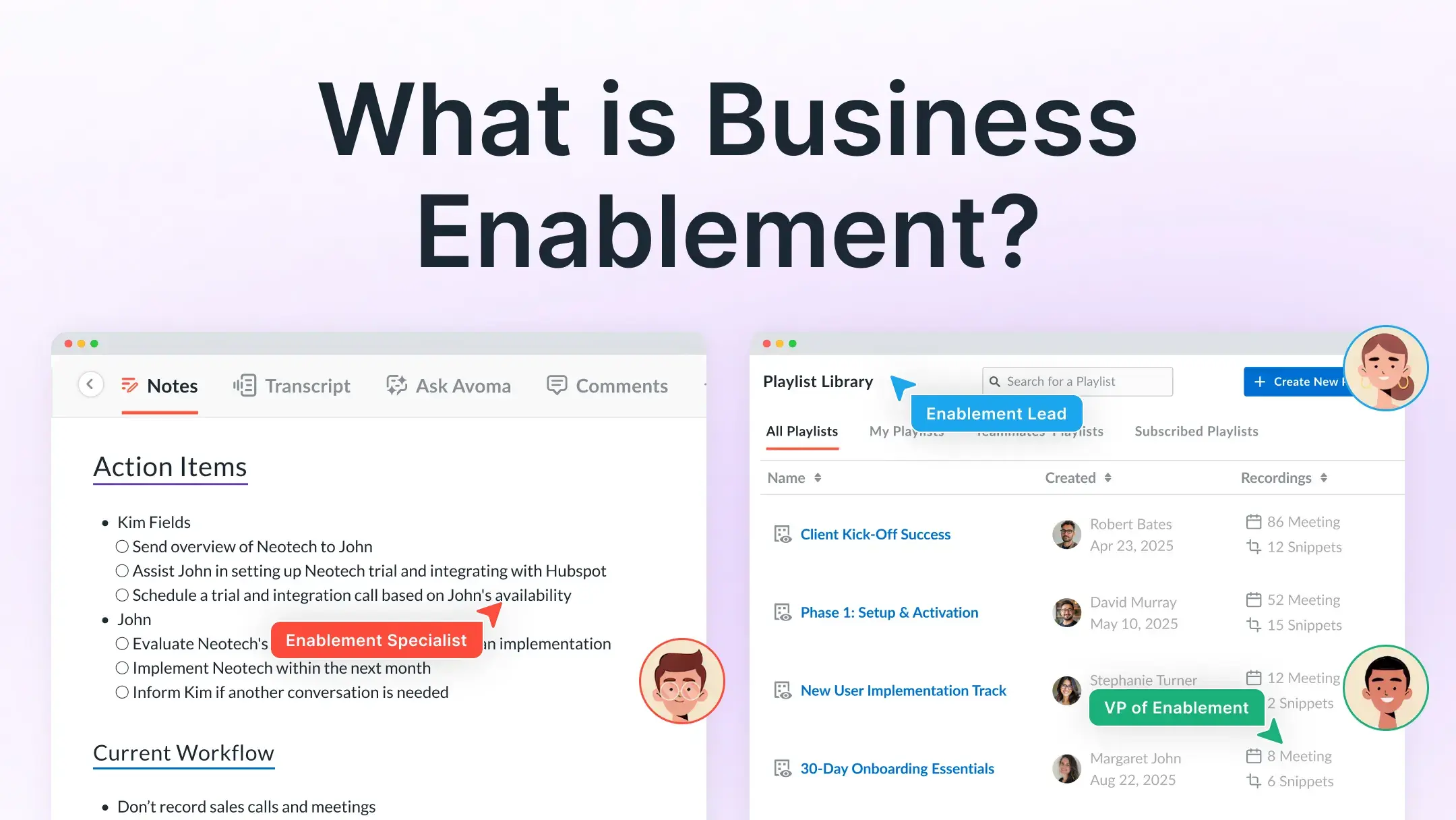
Business enablement defines shared processes and ownership across teams. It becomes necessary as companies scale and workflows such as handoffs, approvals, and onboarding slow down due to unclear ownership and overlapping tools.
A business enablement function aligns workflows with systems so teams execute consistently. This reduces manual work, improves productivity, and maintains execution quality as complexity grows.
This guide explains what business enablement is, how it differs from sales enablement and revenue enablement, why it matters, and how to get started.
What is business enablement?
Business enablement is a strategy that defines the processes, tools, and information teams should use so work is consistent and efficient.
It focuses on key processes, like signing new customers, onboarding them, or getting approvals, and makes them easier to run. It works with Operations, IT, and team leaders to define clear steps, assign owners, and pick the right tools. Business enablement aims to reduce manual work, errors, and boost productivity.
What is the difference between business enablement and sales enablement?
How is business enablement different from revenue enablement?
Gartner describes revenue enablement as part of the revenue engine, while broader business initiatives target company-wide processes and operational performance.
Why will business enablement matter even more in 2026?
Organizations depend on connected, technology-driven workflows, face rapid growth in digital and AI tools, and continue to operate under pressure to save time and money without reducing productivity or retention. Business enablement reduces these risks by designing end-to-end workflows, choosing and integrating tools that fit those workflows, and using process changes to remove waste while keeping execution quality high.
What does a business enablement function own?
Business enablement owns the design and adoption of cross-functional workflows that affect how work gets done across teams. Its responsibility is to define how key processes should run, align systems to those processes, and ensure teams can follow them consistently as the organization scales.
- Definition and maintenance of shared workflows across teams
- Clear ownership and handoffs within those workflows
- Alignment of tools and systems to support defined processes
- Training and change management to drive adoption
Business enablement works alongside Operations, RevOps, and IT, but with a different mandate. While those teams manage systems, data, and reporting, business enablement focuses on how processes span teams and how people execute them in practice.
What business enablement does not own
- Individual team KPIs or performance targets
- Day-to-day management of sales, marketing, or support teams
- System administration, infrastructure, or security
- Tool execution or configuration ownership, which typically sits with Ops, RevOps, or IT
What metrics and KPIs should you track for business enablement?
Business enablement performance is evaluated by whether it saves time, reduces cost, and improves results.
Useful outcome metrics include:
- Employee productivity indicators, such as tasks completed per time period
- Process cycle times for key workflows
- Error or rework rates
- Customer satisfaction and retention
- Revenue-related metrics that reflect process quality, such as conversion or churn where relevant
These metrics connect business enablement work to clear business results.
How does Avoma support business enablement?
Business enablement depends on accurate insight into how people actually work. Meetings are a primary place where decisions, handoffs, and customer interactions happen.
Make the most of your meetings using Avoma, an AI-powered meeting assistant that records and transcribes meetings, generates AI notes, automates follow-up emails and provides conversation and revenue insights.
This supports business enablement in several ways:
- Reduce manual work in meetings by automating AI notes, follow-up, and CRM updates, which saves time and improves data quality
- Standardize how key meetings run by using shared note templates, chapters, and structure that match your defined workflows
- Improve onboarding and coaching with real call libraries, scoring, and talk-pattern insights so new hires and existing teams learn from actual conversations
For organizations where meetings sit at the center of core workflows, Avoma can be a practical part of making business enablement work day to day.
Frequently Asked Questions
Business enablement becomes relevant when growth, tool sprawl, or cross-team dependencies slow execution. Common triggers include inconsistent handoffs, long approval cycles, duplicated work across teams, or declining productivity despite added tools.
Business enablement typically does the opposite. Most programs aim to reduce tool sprawl by standardizing workflows and selecting fewer systems that work well together. The focus is on alignment and adoption, not adding more software.
Business enablement is usually owned by a central operations or enablement leader with cross-functional authority. In many organizations, ownership sits within Operations, RevOps, or a dedicated Enablement function, depending on scope. The owner is responsible for defining shared workflows, aligning tools to those workflows, and driving adoption across teams, while execution remains with functional leaders.
Yes. Smaller organizations often treat business enablement as a shared responsibility led by one owner or project lead. The work starts with documenting key workflows and fixing the most visible friction points.
Business enablement usually involves Sales, Customer Success, Marketing, Operations, Finance, Support, and IT. The function sits at the intersection of these teams where workflows and handoffs break down.
A common mistake is focusing on tools before defining workflows. Business enablement works best when processes are documented first, ownership is clear, and technology is selected to support those processes.


Dive into Our Latest
Avoma Insights.


What's stopping you from turning every conversation into actionable insights?


