
Best sales acceleration software: Stop buying tools that don't move pipeline

Table of Contents:

Most teams buying sales acceleration software are solving the wrong problem. They add tools to fix a slowdown they haven't diagnosed. SDRs are busy but connect rates are flat. Inbound leads come in but meetings take too long to book. Forecast calls rely on rep judgment instead of buyer signals. Pipeline stays inconsistent even when marketing says demand is there.
Adding more tools without knowing where momentum breaks usually makes it worse. More tools means more complexity, not more speed.
Sales acceleration software is not one platform. It is a set of tools that remove friction at specific points in the revenue cycle. This article breaks down what it actually is, where revenue typically slows down, and which tools fix which problems so you can build a stack that moves pipeline.
TL;DR: Sales acceleration software and the modern team stack
Sales acceleration software is a coordinated set of tools that helps SaaS and enterprise revenue teams shorten deal cycles, improve win rates, and increase forecast accuracy by removing friction across the revenue cycle.
It is not one platform. It is a structured stack that improves momentum from targeting to forecasting.
The modern sales acceleration stack and what each tool does
- 6sense → Identify in market accounts using buyer intent data
- Cognism → Reach the right contacts with accurate B2B data
- Chili Piper → Convert inbound demand into meetings instantly
- Outreach or Salesloft → Structure and scale outbound engagement
- Aircall → Increase call efficiency and reduce workflow friction
- Avoma → Improve conversation quality and surface deal risk early
- Clari → Strengthen forecast accuracy and executive pipeline visibility
Acceleration happens when these layers work together.
High-performing SaaS teams use sales acceleration tools to:
- Improve pipeline velocity
- Detect risk earlier in complex deals
- Reduce ramp time
- Increase cross-functional visibility, coaching
- Forecast with confidence
What is sales acceleration software?
Sales acceleration software is technology that helps revenue teams shorten deal cycles, increase win rates, and improve rep productivity by removing friction across the sales process. It supports better targeting, faster routing, structured engagement, stronger conversations, and clearer forecasting. In SaaS and enterprise teams, it works as a connected system, not a standalone tool.
That’s the core.
Acceleration is not about adding more activity. It is about improving momentum across the revenue engine.
When momentum improves, you see it in:
- Faster movement between stages
- Higher stage conversion rates
- Fewer late stage surprises
- More predictable forecasts
Sales acceleration tools exist to influence those outcomes at specific points in the cycle.
What it is not
Sales acceleration software is not just a CRM.
A CRM records activity and stores pipeline data. It does not, on its own, actively improve deal velocity or surface risk.
It is not just automation.
Automating outreach increases volume. Acceleration improves precision, timing, and signal quality.
It is not a collection of disconnected AI features.
AI only drives acceleration when it improves targeting, conversation quality, deal inspection, or forecast accuracy in a measurable way.
This distinction matters because many SaaS teams buy tools in hopes of acceleration without diagnosing where friction actually exists.
So why do SaaS and enterprise revenue teams start searching for sales acceleration software in the first place?
Why SaaS and enterprise teams start looking for it
SaaS and enterprise teams look for sales acceleration software when revenue slows from start to finish. Targeting feels broad. Outreach feels busy. Meetings happen, but momentum fades. Forecast calls feel tense.
Top of funnel friction
Marketing generates accounts, but sales questions whether they are truly in market. SDRs spend time chasing low intent prospects. Connect rates drop because contact data is outdated or misaligned with your ICP.
Pipeline creation becomes inconsistent before deals even start.
Mid funnel drag
Inbound leads do not convert to meetings fast enough. Outreach lacks structure. Discovery calls surface surface level pain, not buying urgency. Buying committees are not multi threaded early.
Deals enter the pipeline, but they do not move with conviction.
Late stage risk and forecast pressure
Managers rely on rep summaries instead of real buyer signals. Objections appear late. Champions go quiet. Close dates slip.
Forecasts become negotiations between optimism and caution.
So where exactly does that breakdown happen inside the system?
Where acceleration actually breaks down in the revenue cycle
Sales acceleration breaks down at predictable friction points across the revenue cycle. It does not fail in one dramatic moment. It erodes step by step, from targeting to forecasting.
If you map your sales process end to end, you will usually find drag in six places.
1. Targeting the wrong accounts
Acceleration breaks early when teams pursue accounts that are not in market. Marketing measures engagement. Sales measures meetings. Neither confirms real buying intent.
The result is pipeline volume without pipeline quality.
2. Poor contact data
Even when the right accounts are identified, bad data slows everything down. SDRs reach out to the wrong personas. Emails bounce. Connect rates drop.
Low data accuracy silently reduces early stage conversion rates.
3. Slow lead routing
Inbound demand loses momentum when routing is delayed. If a qualified buyer fills out a form and waits hours or days for follow-up, urgency fades.
Speed to meeting directly impacts win rate. Routing friction is often invisible until you measure it.
4. Inconsistent outreach execution
Outbound sequences vary by rep. Messaging drifts. Follow-ups are missed. Activity is high, but structure is weak.
Engagement platforms create consistency, but only when paired with strong targeting and data.
5. Low quality discovery and weak deal inspection
Acceleration stalls mid funnel when discovery does not uncover real buying criteria or stakeholder alignment. Managers rely on CRM notes instead of actual conversation data.
Hidden objections and single-threaded deals create late stage surprises.
Conversation intelligence and revenue intelligence improve this layer by turning calls into structured insight, not just recordings.
6. Reactive forecasting
Sales forecasting becomes reactive when leaders only see risk after deals slip. Without early warning signals, pipeline reviews turn into damage control.
Forecast accuracy improves when upstream signals are strong.
When you look at these friction points together, the pattern is clear. Acceleration is not a feature. It is a coordinated system.
So how do modern SaaS and enterprise teams structure that system in practice?
The modern sales acceleration stack for SaaS and enterprise teams
The modern sales acceleration stack is a coordinated set of tools that remove friction at each stage of the revenue cycle. There is no single sales acceleration platform that solves targeting, engagement, conversations, and forecasting on its own. SaaS and enterprise teams build acceleration by layering focused tools into a connected system.
The mistake is searching for one 'best sales acceleration software' product.
The better question is: Where are we losing momentum?
Once you diagnose that, the stack becomes clearer.
6sense for Identifying in market accounts

Acceleration starts before outreach.
6sense helps enterprise SaaS teams identify accounts that are actively researching solutions. It uses intent signals and account-level data to prioritize who sales should engage now, not later.
Why this matters:
- Reps focus on accounts with real buying activity
- Marketing and sales align around demand, not guesses
- Early-stage pipeline quality improves
If targeting is off, every downstream layer suffers. Intent sits at the top of the stack for a reason.
Cognism for improving prospecting precision
Once accounts are identified, contact accuracy determines execution speed.
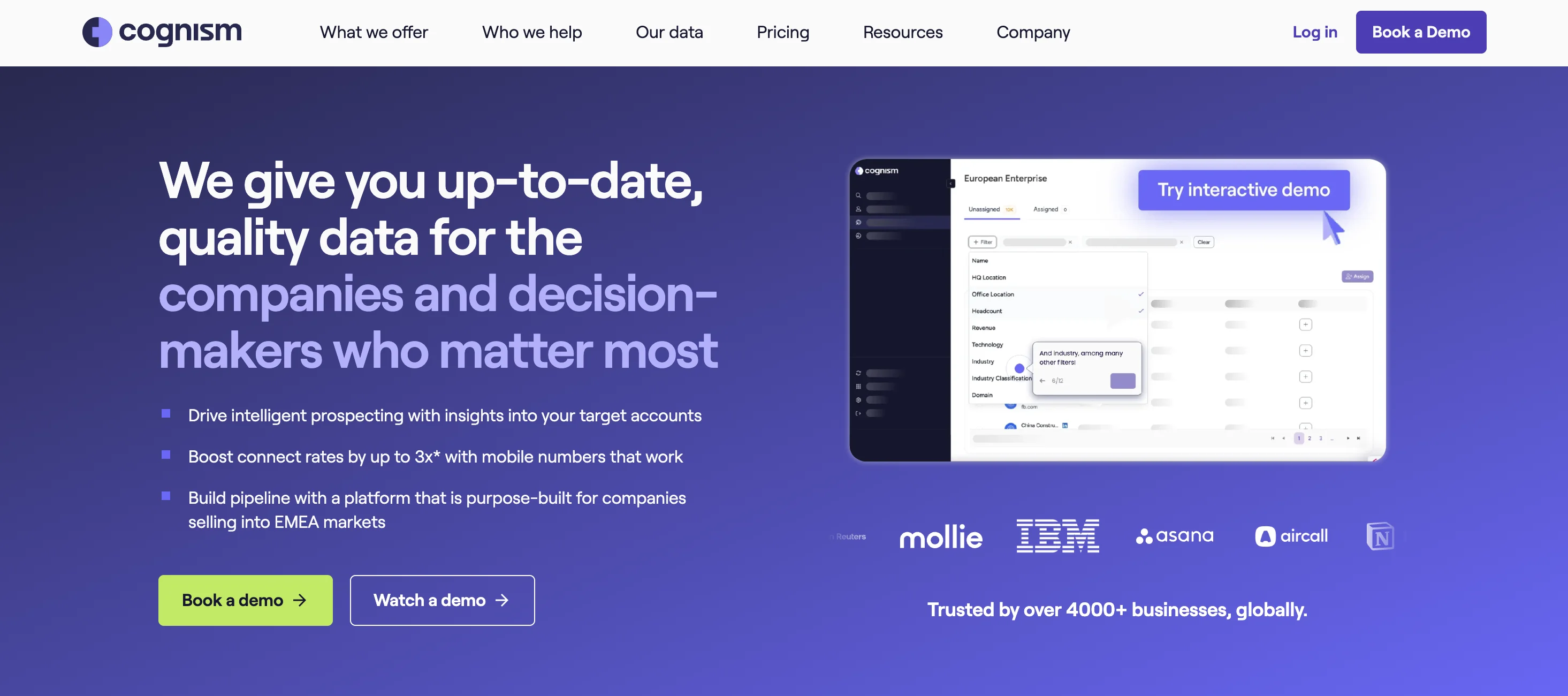
Cognism provides high-accuracy B2B contact data aligned to strict ICP criteria. For outbound heavy teams and enterprise expansion motions, this reduces wasted outreach and improves connect rates.
Acceleration impact:
- Fewer bounced emails
- Better persona alignment
- Higher early stage conversion
Clean data increases pipeline efficiency before a single sequence is launched.
Chili Piper for converting inbound instantly
Inbound acceleration depends on speed.
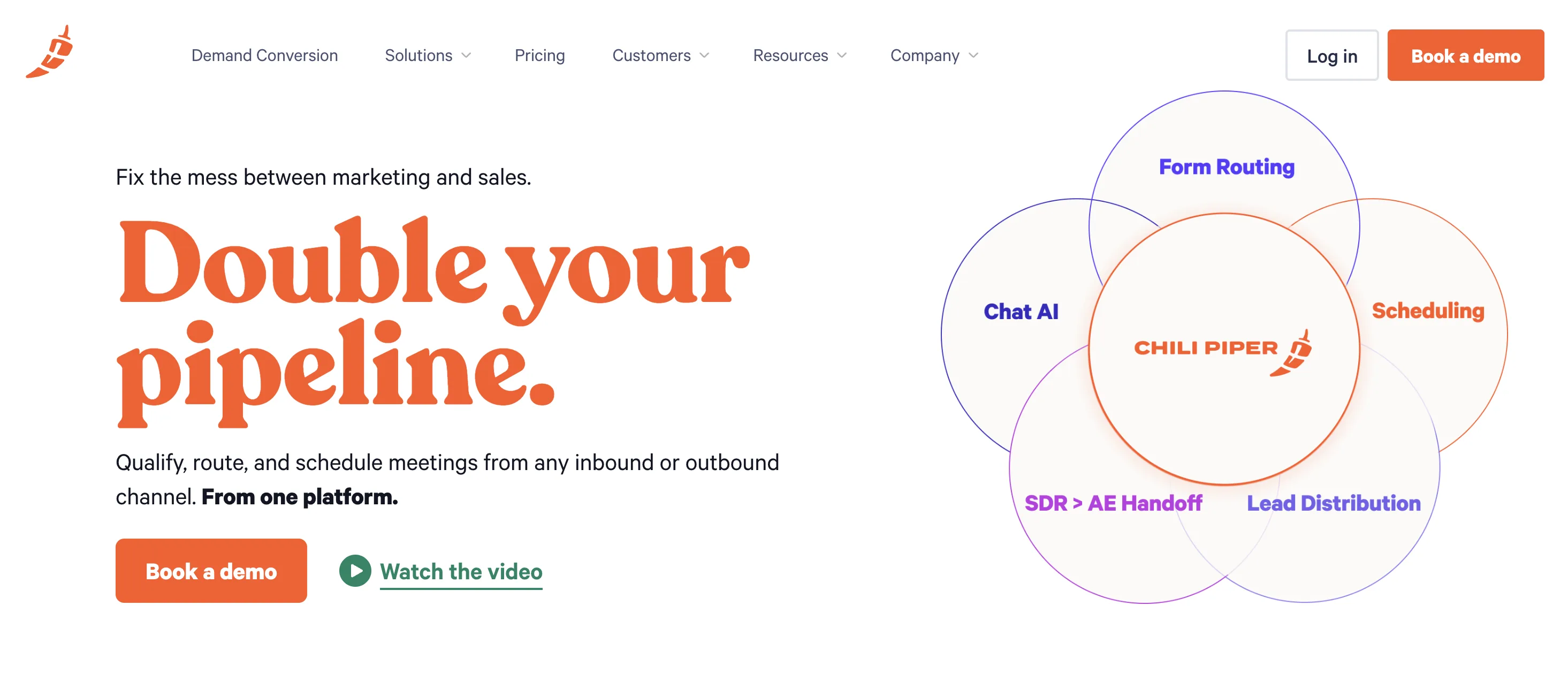
Chili Piper converts form fills into booked meetings in real time and routes leads based on territory, segment, or account ownership. For PLG and high demo volume teams, this removes lag between interest and conversation.
Acceleration impact:
- Reduced response time
- Higher meeting conversion rate
- Less manual routing work
Buyers lose urgency quickly. Instant scheduling preserves momentum.
Outreach or Salesloft for scaling structured outbound

Sales engagement platforms structure outbound execution.
Outreach and Salesloft help SDR teams manage sequences, prioritize tasks, and maintain consistent follow-up across accounts. In enterprise sales motions, this adds discipline to multi-touch engagement.
Important nuance:
If your targeting is wrong, your engagement platform will just reach the wrong people faster. Execution sits in the middle of your sales stack — it takes your ICP, sequences, and messaging and runs them at scale. It doesn't fix what's above it. It just amplifies it. So if your inputs are solid, you get more wins. If they're not, you get more misses.
Aircall for increasing call productivity
Live conversations require operational efficiency.
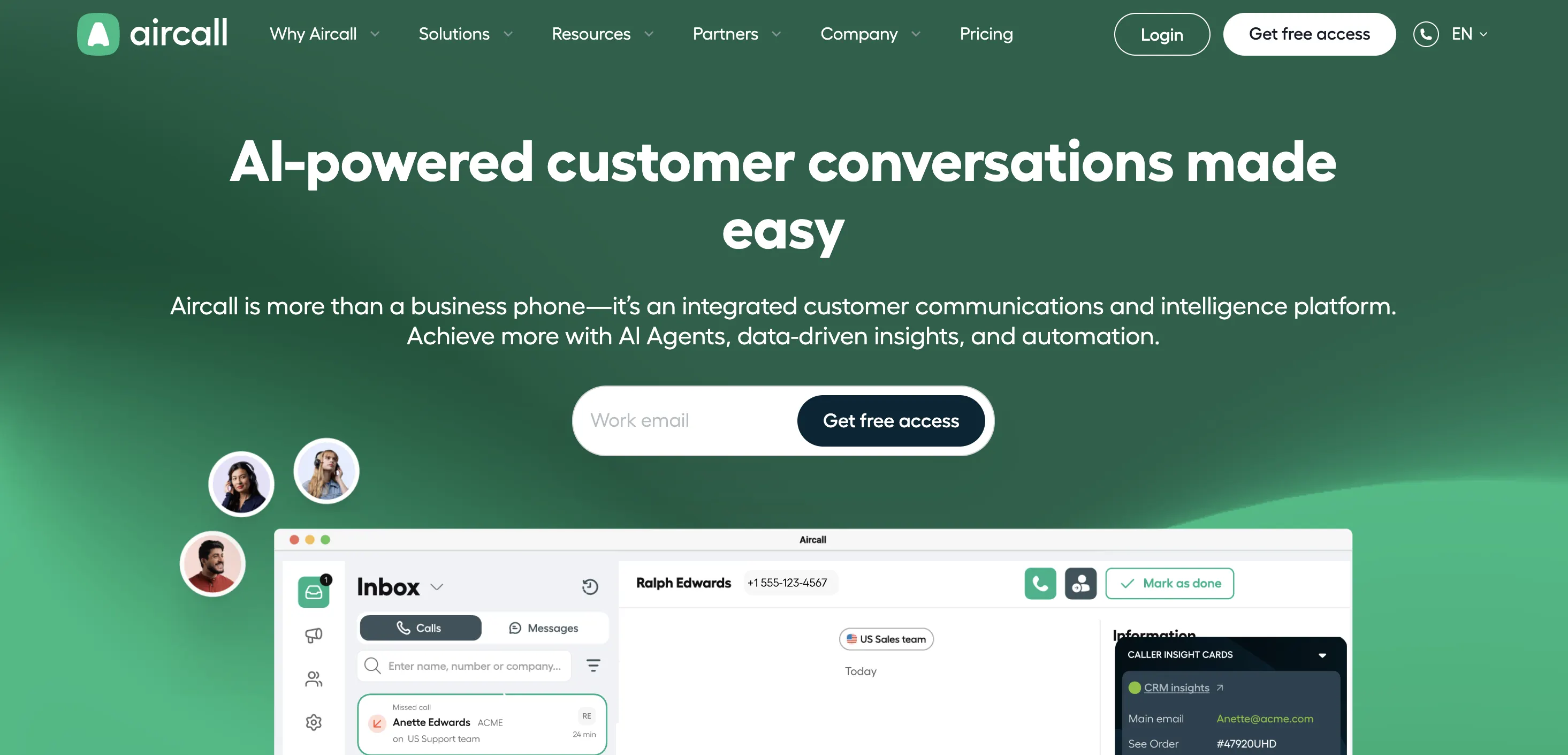
Aircall integrates cloud calling directly into CRM workflows, reducing manual logging and context switching. For inside sales teams and distributed environments, this increases selling time.
Acceleration impact:
- Less administrative overhead
- Real-time monitoring and coaching
- Cleaner activity data
When reps switch tools less, they spend more time selling.
Avoma for improving conversation quality and deal visibility

Acceleration improves when conversation quality improves.
Avoma combines conversation intelligence and revenue intelligence to surface deal risks, objection trends, stakeholder gaps, and next step clarity. It turns call data into structured signals that managers can use for sales coaching and inspection.
Acceleration impact:
- Earlier risk detection
- More consistent discovery standards
- Cross-functional visibility between sales, CS, and leadership
More activity does not close complex deals. Better conversations do.
Clari for strengthening forecast accuracy

Forecast accuracy is the executive layer of acceleration.
Clari aggregates pipeline data, engagement signals, and deal movement to improve forecast reliability. For CROs managing board expectations, early risk identification is critical.
Acceleration impact:
- Clearer pipeline visibility
- Fewer late stage surprises
- Stronger forecast discipline
Acceleration is about knowing sooner which deals will close.
When you zoom out, this stack tells a system story:
- Identify in market accounts
- Reach the right contacts
- Convert inbound instantly
- Execute structured engagement
- Run efficient live conversations
- Improve deal quality and coaching
- Maintain forecast clarity
That is how SaaS and enterprise teams operationalize sales acceleration technology.
So how do you evaluate sales acceleration software without adding more tools than you need?
How to evaluate sales acceleration software
You evaluate sales acceleration software by diagnosing where momentum breaks, defining measurable outcomes, and selecting tools that remove friction without adding complexity. Evaluation is about system design, not feature comparison.
Start with your bottleneck
Look at where deals actually slow down:
- Deals stall between stages
- Reps spend time on low value activity
- Data breaks between marketing, sales, and CS
- Forecasts miss repeatedly
Match the tool to the friction.
Define acceleration metrics before buying
Set baseline metrics before evaluating vendors:
- Sales cycle length
- Stage conversion rates
- Win rate
- Ramp time
- Forecast variance
If you cannot measure improvement, you cannot prove acceleration.
Look for cross-functional visibility
Acceleration compounds when signal flows across teams.
Intent shapes prioritization.
Conversation data shapes coaching.
Deal risk signals shape forecasting.
Disconnected tools create reporting noise.
Avoid tool sprawl
More tools do not mean more speed.
Prioritize integration, adoption, and daily usage. If a new platform does not remove friction, it becomes friction.
Before you buy: Build the strategy
Before purchasing any sales acceleration technology, design the system it will support.
1. Map your revenue cycle
Document how a deal moves from first touch to closed won. Clarify stage definitions, exit criteria, stakeholder involvement, and duration.
You cannot accelerate what you have not mapped.
2. Identify the highest impact friction point
Focus on the layer that creates the largest drag. One weak stage can offset improvements elsewhere.
3. Align leadership on outcomes
Define what acceleration means:
Alignment simplifies tool decisions.
4. Decide where technology fits
Only now evaluate vendors.
Technology should support your revenue architecture. Not define it.
Once the foundation is stable, the next step is not buying tools. It is building a clear acceleration strategy.
When you do not need sales acceleration software
You do not need sales acceleration software if your sales fundamentals are not in place. Acceleration improves a working system. It does not fix the absence of one.
You likely do not need it if:
- You do not have product market fit
- Your sales process is undefined
- CRM hygiene is poor
- Your team is under five reps
Acceleration compounds when there is something solid to accelerate.
Conclusion
Sales acceleration software does not fix revenue.
Clarity does.
When signal improves across your revenue engine, momentum becomes measurable. Risk becomes visible earlier. Forecast calls become less about opinion and more about evidence.
The teams that increase pipeline velocity and forecast accuracy are not the ones that add the most tools. They are the ones that reduce friction deliberately and connect their systems around real buyer behavior.
If your revenue engine feels busy but not compounding, ask one question:
Where is momentum leaking?
Fix that layer.
And that changes everything from who enters your pipeline to how confidently you call the quarter.
Frequently Asked Questions
Sales acceleration software focuses on improving deal velocity, stage conversion rates, and forecast accuracy across the revenue cycle. It addresses operational friction in targeting, routing, engagement execution, conversation analysis, and revenue forecasting.
Sales enablement software focuses on rep readiness through content management, training, onboarding, and coaching resources. Enablement improves preparedness, while acceleration technology is designed to influence active pipeline movement and measurable revenue performance.
Sales acceleration software does not replace CRM platforms such as Salesforce or HubSpot. A CRM functions as the system of record for accounts, contacts, opportunities, and pipeline stages.
Acceleration tools integrate with the CRM to enhance data quality, automate workflows, analyze conversations, and improve forecasting visibility. They operate as performance layers around the CRM rather than substitutes for it.
6sense supports sales acceleration by identifying in-market accounts using buyer intent data and predictive analytics. It helps revenue teams prioritize accounts that are actively researching solutions, improving targeting precision before outreach begins.
By aligning marketing and sales around verified buying signals, 6sense reduces time spent on low-intent accounts and improves early-stage pipeline quality.
Cognism provides B2B contact data that improves prospecting accuracy within defined ideal customer profiles. Accurate contact information increases connect rates and reduces wasted outreach effort.
Within a sales acceleration stack, Cognism strengthens the top-of-funnel layer by ensuring that identified accounts are matched with the correct decision-makers and buying committee members.
Chili Piper improves inbound conversion by enabling real-time meeting scheduling and automated lead routing based on territory or ownership rules. This reduces the delay between form submission and live sales engagement.
Faster response times preserve buyer intent and increase meeting booking rates, which directly impacts pipeline creation and early-stage momentum.
Outreach and Salesloft are sales engagement platforms that structure outbound sequences, task prioritization, and multi-touch follow-up. They create consistency across SDR and account executive outreach workflows.
When paired with accurate targeting and contact data, these platforms improve activity coordination, reduce missed follow-ups, and increase engagement discipline across complex sales motions.
Avoma combines conversation intelligence and revenue intelligence to analyze call recordings, identify objection patterns, and surface stakeholder gaps. It converts unstructured call data into structured insights.
This improves discovery consistency, highlights deal risk earlier, and supports coaching based on actual buyer signals rather than rep summaries alone.
Clari aggregates CRM data, engagement activity, and pipeline movement to provide clearer forecast visibility. It identifies risk signals such as stalled deals, slipping close dates, and declining engagement trends.
By centralizing revenue data and highlighting inconsistencies early, Clari reduces reliance on subjective judgment and improves executive-level forecast discipline.


Dive into Our Latest
Avoma Insights.





What's stopping you from turning every conversation into actionable insights?


