
AI-powered revenue forecasting software for confident, evidence-backed forecasts
Avoma helps reps submit confident forecasts using AI-generated deal scores, forecast risks, and conversation intelligence, while giving managers the evidence to validate every commit.




Where most sales forecasting software stops short

Forecast calls turn into spreadsheet meetings
Commit means something different in every region
The forecast number changes shape on its way to the board
Nobody can tell if a rep is improving at forecasting
Avoma: An AI sales forecasting software built on real pipeline signals
Flag at-risk deals before they go cold
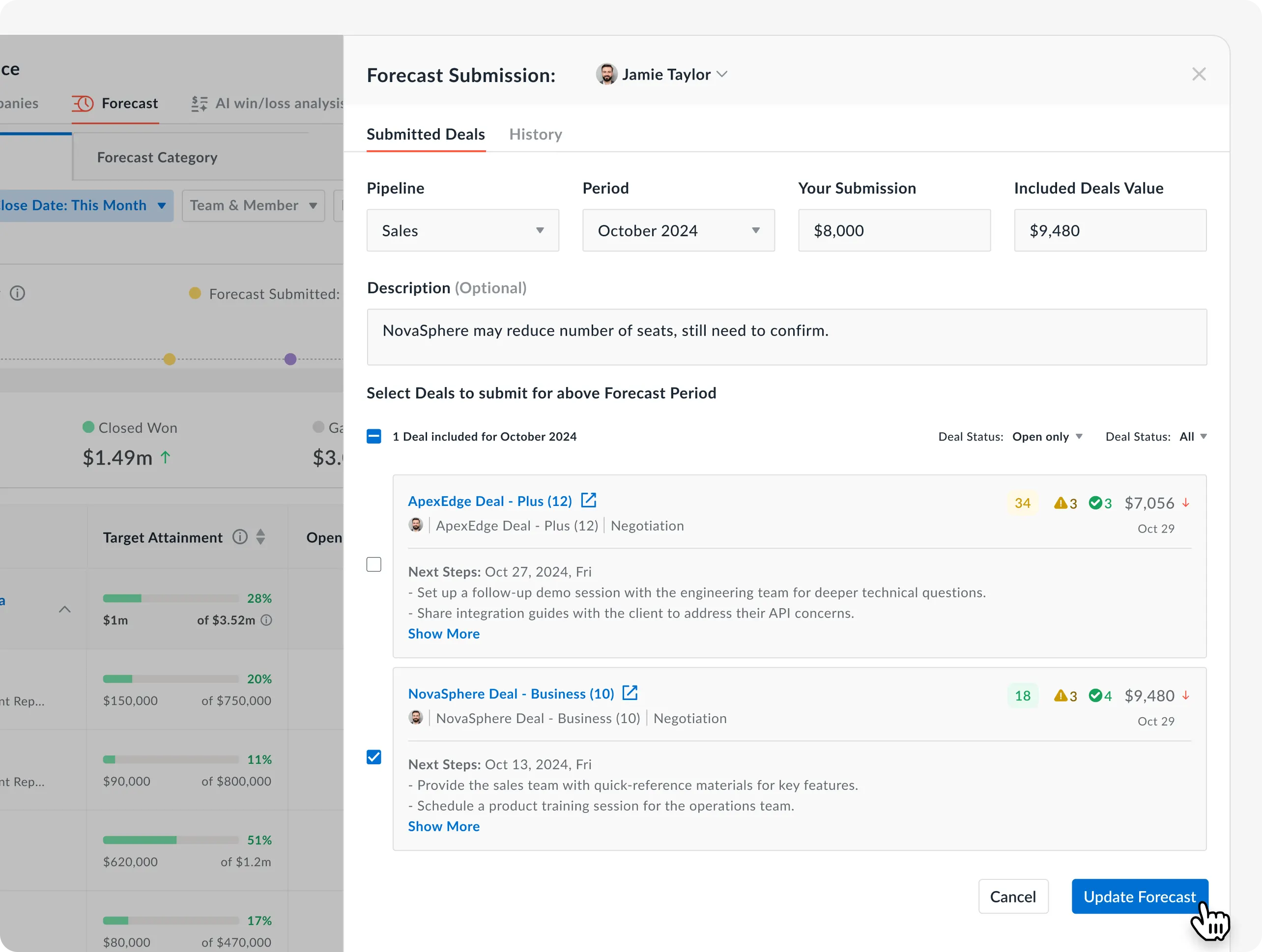
AI-powered deal health scores help sales teams improve forecast accuracy by analyzing conversation intelligence, CRM activity, buyer engagement, and pipeline changes. AI-generated Risk Scores, Qualification Scores, and Forecast Risks show at the deal level inside the submission table, so reps make more defensible commit decisions and managers catch underqualified deals before they reach the final number.
- Risk Score is driven by conversation intelligence signals from calls, emails, and meeting notes
- Qualification Score reflects deal criteria including executive sponsor coverage, next steps, and stakeholder involvement
The Pipeline Walk compares your pipeline at the start and end of a period, showing historical and current deal values side by side. A color-coded Pipeline Trend chart shows deal distribution and total value across stages so pipeline reviews start with data.
- Period-over-period comparison shows which deals advanced, regressed, or were lost
- Drill into any stage to see deal counts, values, and movement at the opportunity level
- Overlay forecast submissions on the Pipeline Trend chart to compare pipeline against what was committed
Track what was committed, changed, and by whom
The Forecast Overview consolidates key pipeline metrics including, target, closed won, commit, open deals, and others, directly into the submission screen. A guided workflow walks reps through Commit, Best Case, Pipeline, and Not Forecasted with per-category deal counts.
- Weighted Amount metrics calculate totals based on deal-stage probability, separating likely closes from raw pipeline value
- Submission history logs who changed what and when, with prior week comparisons showing how Commit and Best Case numbers shifted
- Forecast reminders go out by email or Slack on a recurring schedule, in each person's local timezone, to keep submissions consistent
.webp)
Track quota attainment against pipeline
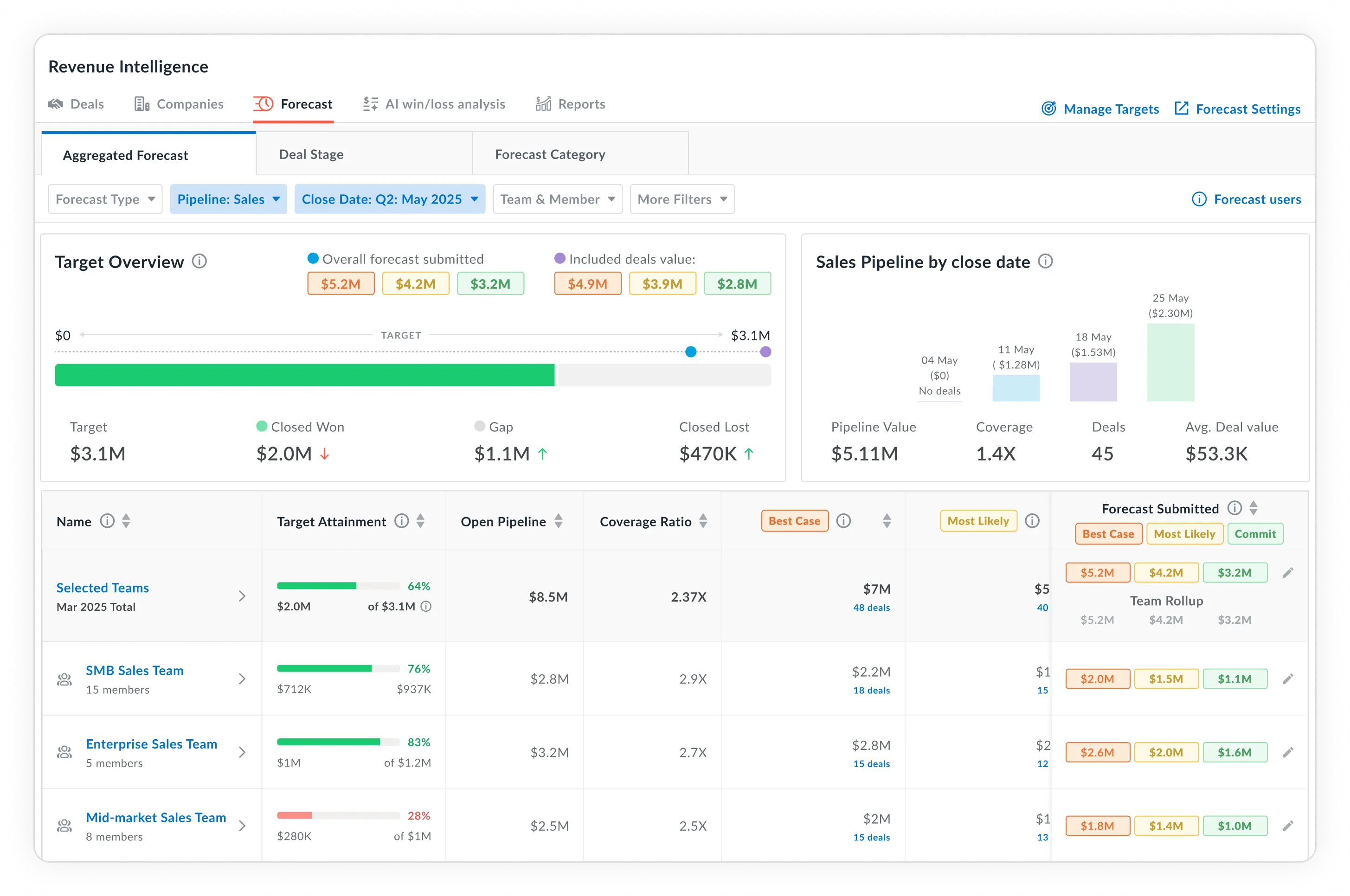
The Target and Pipeline Overview shows percentage of quota attainment alongside open pipeline and gap coverage. Targets are set at team level, member level, or both, with roll-up computed when a team-level target is not explicitly set.
- Set targets by team, by member, or both in the same flow
- Attainment percentage updates as deals close and pipeline shifts
- Gap and coverage metrics drop away when quota is reached
Give leadership a forecast built on deal data
Pipeline, Best Case, Commit, and Closed Won categories roll up by rep and manager into a structured revenue forecasting view. Custom forecast categories map to any CRM property so definitions reflect how your business operates across segments and product lines.
- Custom forecast categories ensure Commit, Best Case, and Pipeline mean the same thing across the team before rolling up
- Custom amount fields per segment support revenue prediction for multi-product teams
- Managers drill into selected deals to validate Commit with deal-level evidence before the number reaches leadership
3 minutes
6+
1 in 2
How Avoma's AI-powered revenue forecasting software improves sales forecast accuracy
Link Avoma to Salesforce or HubSpot. Deal data, stage history, close dates, and custom fields sync across so the forecast dashboard reflects current pipeline status from day one.
After meetings, Avoma writes notes, next steps, and activity back to your CRM and scores the deal against conversation signals and buyer engagement. At-risk opportunities are flagged before they show up as misses in the forecast.
Managers check the forecast dashboard to review pipeline health, validate rep commits against deal evidence, and roll up to leadership. This is where revenue intelligence connects conversation data to pipeline reality, giving a forecast built on what is happening in deals, not what reps reported.
Trusted by high-performing revenue teams forecasting with confidence
Frequently asked questions

What's stopping you from turning every conversation into actionable insights?
